How to Create and Sell Digital Products in 2026: My Step-by-Step Playbook

Why Digital Products Are My Favorite Business Model Right Now
I still remember the first time I sold something while I was asleep. It was a small ebook, priced modestly, and the notification hit my phone at 3 a.m. No inventory, no shipping, no customer standing in front of me. That single sale changed how I think about business, and in 2026 the opportunity is bigger than it has ever been. The global creator economy is expected to reach roughly $249 billion in 2026, according to Coherent Market Insights, and digital products are the fastest-growing slice of that pie outside of brand deals and ad revenue.
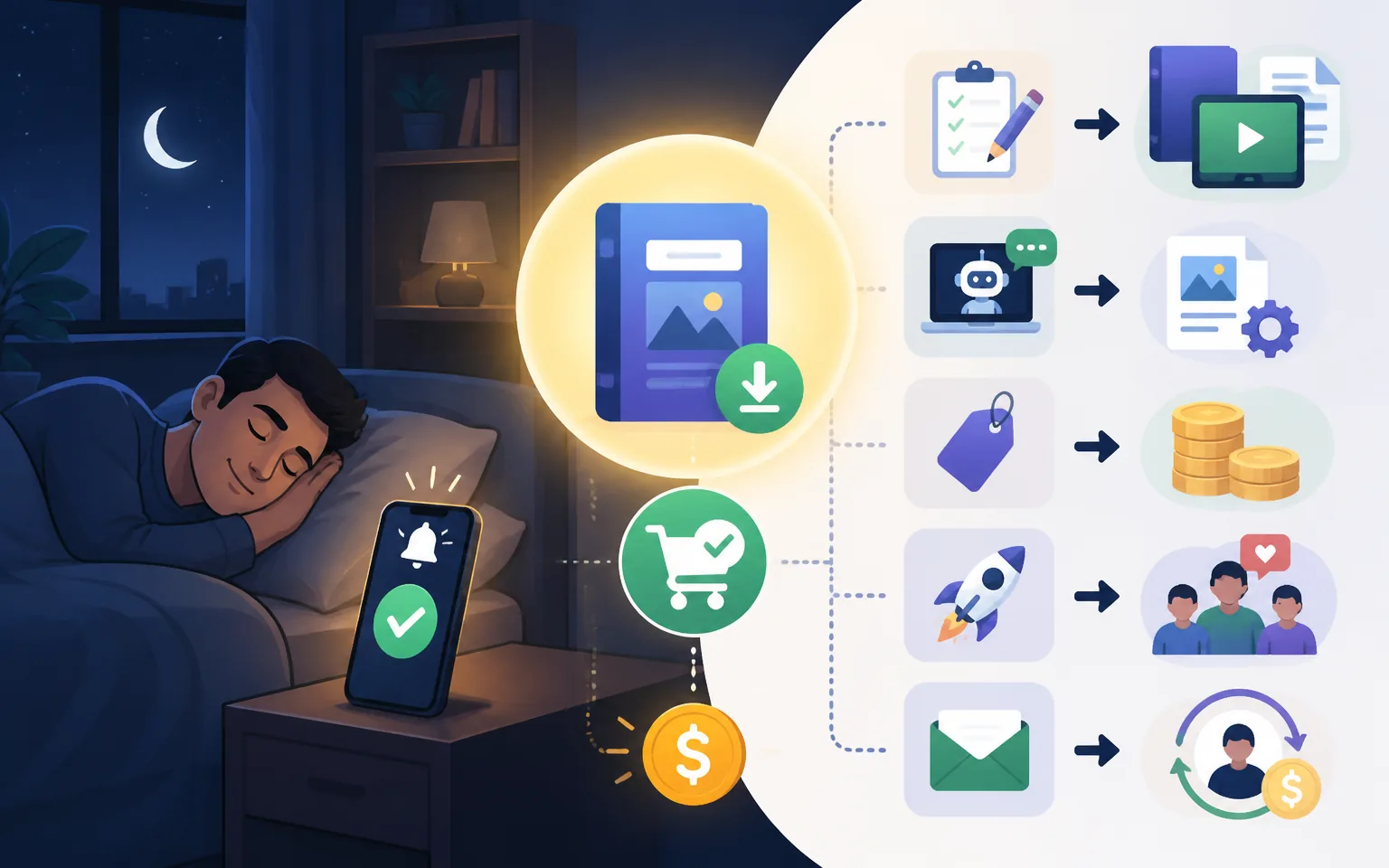
In this guide I’m going to walk you through exactly how I create and sell digital products — from choosing the right product type, to building it with AI assistance, to pricing it, launching it, and turning it into recurring income with email and affiliate marketing. This is the playbook I wish someone had handed me years ago.
What Counts as a Digital Product (And Which Ones Actually Sell)
A digital product is anything you create once and sell repeatedly without holding physical inventory: ebooks, online courses, templates, presets, printables, software tools, membership communities, stock assets, and paid newsletters. The digital product segment is now worth around $32 billion and growing at roughly 22–28% year over year, per Fungies.io’s 2026 creator economy analysis — nearly double the growth rate of the broader creator economy.
Not all product types are equal, though. Here’s how I think about the main categories.
Online Courses
Courses remain the largest single digital product category. The global online courses market is estimated at $347 billion in 2026 and projected to grow at a 17.6% CAGR through 2035, according to Business Research Insights. Courses command the highest prices — anywhere from $47 mini-courses to $2,000 flagship programs — but they also demand the most production effort.
Ebooks and Guides
Ebooks are the fastest product to ship. The worldwide ebook market is projected at $15.65 billion in 2026 per Statista, and Amazon alone sells over 487 million ebooks annually through Kindle. I use ebooks as both standalone products and entry-level offers that lead buyers toward my bigger products.
Templates, Printables, and Swipe Files
Notion templates, Canva templates, spreadsheet trackers, email swipe files — these are my favorite beginner products because they solve one narrow problem and can be built in a weekend. Low price, high volume, minimal support.
Memberships and Paid Communities
Recurring revenue is the holy grail. Paid communities and membership sites turn one-time buyers into monthly subscribers, smoothing out the feast-or-famine cycle that plagues most creators.
Step One: Validate the Idea Before You Build Anything
The biggest mistake I made early on was building products nobody asked for. Now I never create anything until I’ve validated demand. Here’s my process.
First, I mine my existing audience. Blog comments, email replies, and social DMs are a goldmine of “I wish someone would show me how to…” statements. If you already run a blog, your search console queries tell you exactly what people want from you — I covered how to turn that traffic into income in my guide on how to monetize a blog.
Second, I check whether people already pay for similar products. Competition is validation. If Gumroad, Udemy, and Etsy all have sellers making money on a topic, the market exists. Notably, 67% of monetizing creators now sell digital products, up from 52% in 2024, according to Webtonic’s 2026 creator economy report — the space is crowded precisely because it works.
Third, I pre-sell whenever possible. I’ll announce a product to my email list at a discounted “founding” price before it’s built. If fewer than a handful of people buy, I refund them and shelve the idea. That’s a few days of work saved versus months building something dead on arrival.
Step Two: Build the Product (With AI Doing the Heavy Lifting)
This is where 2026 is a completely different game from even three years ago. AI has collapsed production time for digital products by an order of magnitude. I run my entire operation as a solo creator — something I detailed in my one-person business with AI playbook — and AI tools are the reason that’s possible.
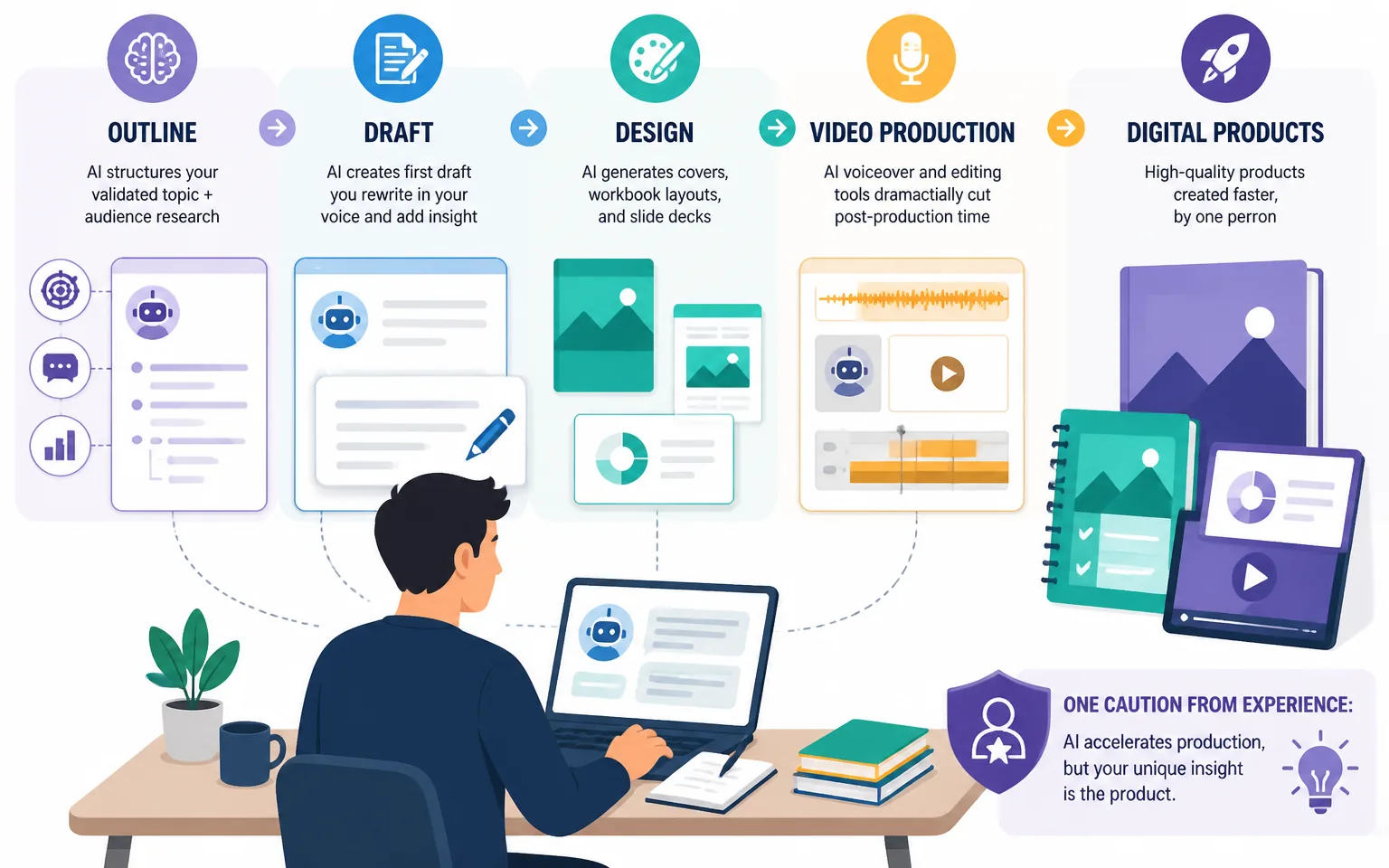
Here’s how I use AI at each stage of production. For outlining, I feed my validated topic plus my audience research into an AI assistant and iterate on a structure until it matches what buyers actually asked for. For drafting, AI produces the first rough pass of ebook chapters or course scripts, which I then rewrite heavily in my own voice with my own examples — buyers can smell generic AI content instantly, and it kills refund rates and reviews. For design, tools like Canva’s AI features generate covers, workbook layouts, and slide decks in hours instead of weeks. For video courses, AI voiceover and editing tools cut post-production time dramatically.
One caution from experience: AI accelerates production, but your unique insight is the product. More than 200 million people worldwide now identify as content creators, per Coherent Market Insights, and AI has lowered the barrier for all of them. The creators winning in 2026 are the ones whose products contain lived experience, specific numbers, and opinionated frameworks that AI can’t fabricate.
Step Three: Price It Properly
Underpricing is the most common mistake I see. Digital products have effectively 100% gross margins, and price is a signal of value. My rough framework: templates and printables at $9–$39, ebooks at $19–$49, mini-courses at $47–$99, flagship courses at $199–$999, and memberships at $9–$49 per month.
Two tactics have consistently lifted my revenue. Tiered pricing: offering a basic, standard, and premium version of the same product raises average order value because a meaningful chunk of buyers choose the middle or top tier. Order bumps and upsells: adding a small complementary product at checkout (a template pack with an ebook, for example) can lift revenue 15–30% with zero additional traffic.
And don’t be afraid to raise prices. Self-published authors now take 45% of Amazon ebook royalties according to Whop’s 2026 ebook statistics — independent creators compete with big publishers every day, and buyers pay for outcomes, not page counts.
Step Four: Choose Where to Sell
You have three broad options, and I use a mix of all three.
Marketplaces (Udemy, Etsy, Amazon KDP)
Marketplaces bring you traffic but take a cut and own the customer relationship. They’re good for discovery and social proof early on.
Creator Platforms (Gumroad, Podia, Whop, Teachable)
These handle payments, delivery, and VAT for a percentage or a monthly fee. This is where I recommend most people start — you keep the customer email addresses, which matters enormously for the next section.
Your Own Website
Selling from your own WordPress site with a checkout plugin gives you maximum margin and control. It’s more setup work, but once you have consistent traffic it’s the most profitable path. North America accounts for about 45% of global online course adoption per Business Research Insights, and most of those buyers are perfectly comfortable purchasing directly from a creator’s website.
Step Five: Sell It With Email (This Is Where the Real Money Is)
Here’s the truth almost every successful digital product seller will tell you: the product page doesn’t sell the product — the email list does. Email marketing returns an average of $36–$45 for every $1 spent, per Emailmonday’s 2026 ROI statistics, and email converts at 4.24% versus just 0.59% for social media according to Nutshell’s benchmarks. Nothing else comes close.
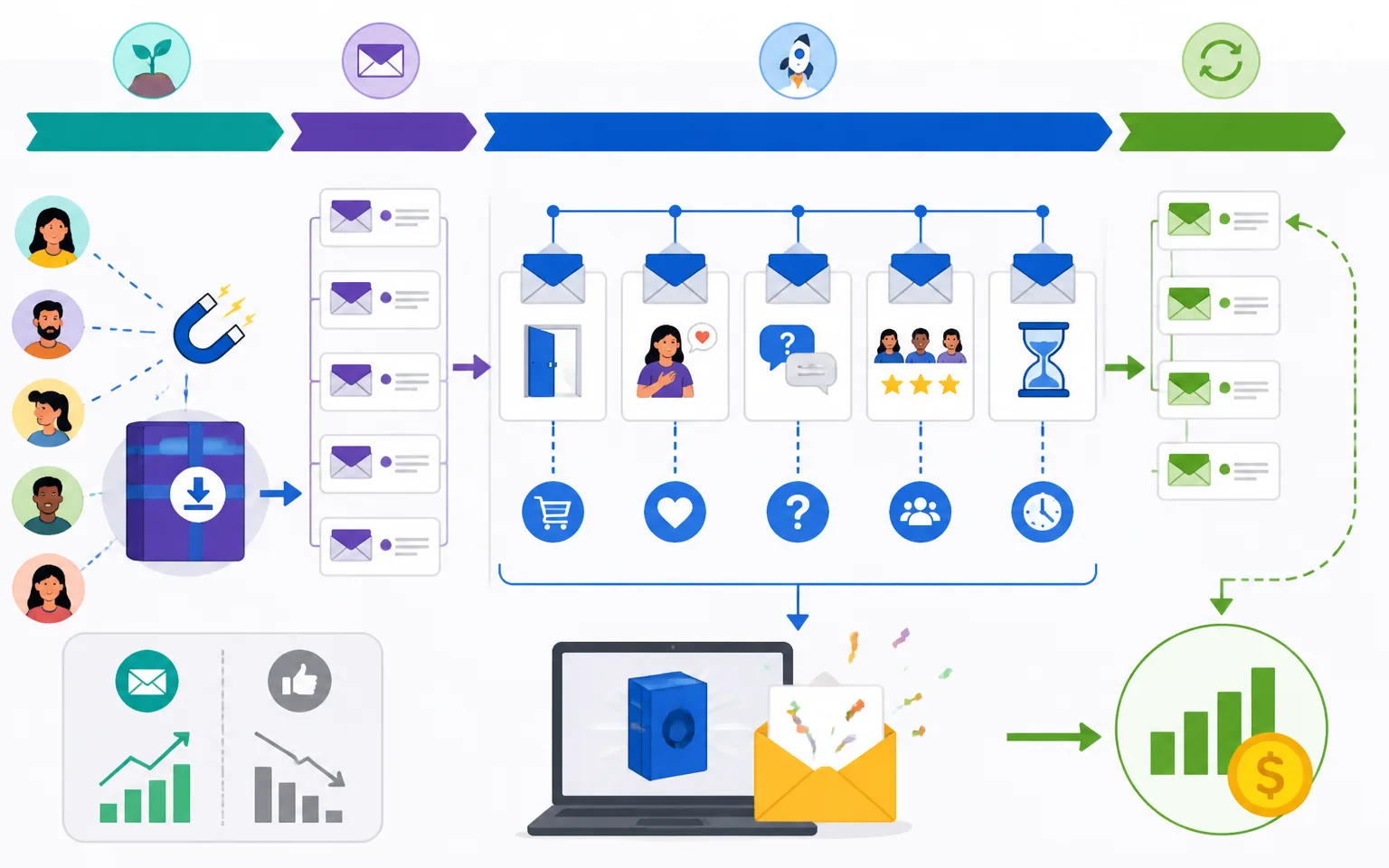
My email-driven launch sequence looks like this. First, I grow the list before the product exists using a free lead magnet closely related to the paid product — I break down my exact system in my guide to growing an email list with AI lead magnets. Second, I run a pre-launch sequence of three to five emails that teach genuinely useful material while seeding the problem my product solves. Third, launch week: an open-cart email, a story email, an FAQ/objections email, a social-proof email, and a final deadline email. Deadlines matter — a real closing date or expiring bonus routinely doubles sales in the final 24 hours.
After launch, the product goes evergreen: new subscribers enter an automated sequence that presents the offer over their first two weeks on my list. That automation is what turns a digital product from a launch spike into a monthly paycheck.
Step Six: Add Affiliate Fuel
Once a product converts reliably, I recruit affiliates. Giving partners 30–50% commission costs nothing upfront and puts your product in front of audiences you could never reach alone. I pair this with my own affiliate promotions in the same niche, so my emails alternate between my products and carefully chosen partner offers — a system I explained in my affiliate email marketing guide. The two revenue streams reinforce each other: affiliates grow my customer list, and my customer list buys affiliate offers.
The Numbers: What a Realistic First Year Looks Like
Let me set honest expectations. Most first digital products don’t make life-changing money — they make learning-changing money. A typical realistic first-year path: months one to three, build a list of 500–1,000 subscribers with a lead magnet; month four, launch a $29–$49 product to that list and make $500–$2,000; months five to twelve, ship a second, higher-priced product, set up evergreen automation, and grow toward $1,000–$3,000 per month.
The market tailwind is real — analysts project the creator economy could reach $500 billion by 2030 per Fortune Business Insights — but the creators who capture it are the ones who ship a version one, gather feedback, and iterate. Your first product is a draft of your second.
Mistakes I Made So You Don’t Have To
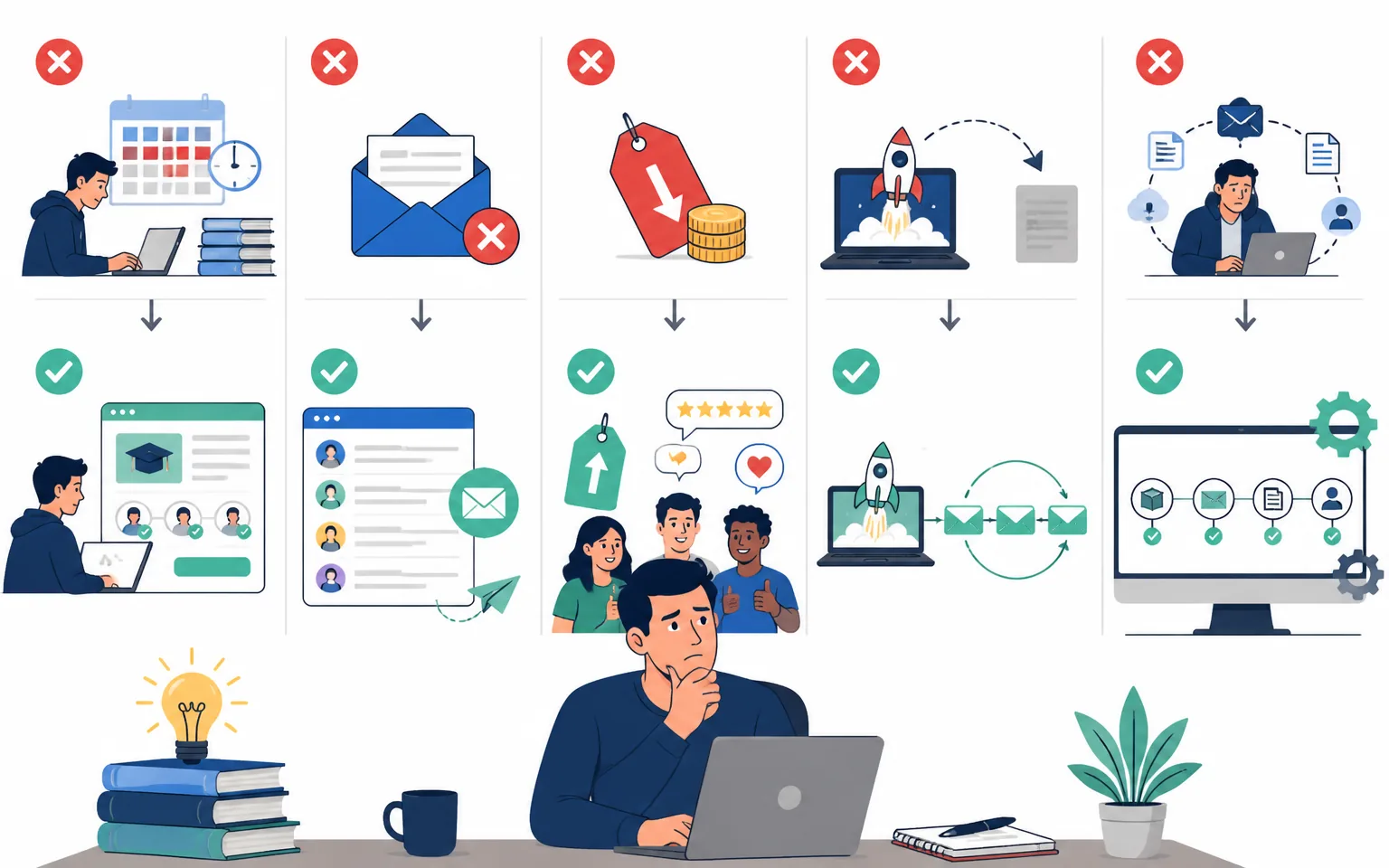
Building for months before validating: I once spent eleven weeks on a course that sold four copies. Pre-sell first, always. Ignoring the email list: I treated email as an afterthought for my first two products and left most of the revenue on the table. Competing on price: dropping prices attracts refund-prone bargain hunters; raising prices attracted buyers who actually finished the course and left testimonials. One-and-done launching: a product launched once and never mentioned again earns almost nothing; a product woven into an evergreen email sequence earns every single week. Doing everything manually: from delivery to receipts to follow-up emails, automation is what makes this a business rather than a second job.
Frequently Asked Questions
How much money do I need to start selling digital products?
Almost none. You can create an ebook or template with free tools and list it on Gumroad or Payhip at no upfront cost. My recommended starter stack — a domain, basic hosting, and an email marketing tool — runs under $30 a month.
What’s the best digital product for a complete beginner?
A template or a short, focused ebook. Both can be built in days, validate your topic cheaply, and teach you the full create-launch-sell loop before you invest months in a course.
Can I really use AI to create digital products?
Yes, for acceleration — not for substitution. Use AI for outlines, first drafts, design, and repurposing, then inject your own experience, data, and voice. Products that read like raw AI output get refunded and reviewed poorly.
How do I protect my digital products from piracy?
Watermarking PDFs, license keys for software, and gated membership access help, but honestly, some piracy is unavoidable. I focus on making the legitimate buying experience excellent and treat piracy as a marketing cost rather than a battle to win.
Do I need a big audience before I launch?
No. A small, targeted list of 300–500 engaged subscribers can absolutely support a profitable first launch. Conversion depth beats audience width — a tiny list that trusts you outsells a large cold following every time.
Final Thoughts: Start Smaller Than You Think
The digital product business rewards shipping, not perfecting. The market is enormous and growing — a $32 billion product segment inside a $249 billion creator economy — but your slice of it starts with one small product solving one specific problem for one clearly defined person. Validate it, build it fast with AI as your assistant, price it with confidence, and sell it through email. Do that once, and you’ll have a repeatable machine you can run for years.
If you found this useful, my guides on blog monetization and building a one-person AI business are the natural next steps. Now go make something people can buy while you sleep.