Affiliate SEO in 2026: How I Rank and Earn When AI Search Keeps the Clicks

Here is the uncomfortable truth I have had to accept as an affiliate publisher: Google is keeping more of my clicks than ever, and it is not giving them back. AI Overviews now answer a huge share of queries right on the results page, and every affiliate site I know — including mine — has felt the squeeze. And yet, my affiliate revenue from organic search is still growing. Not because the old playbook still works, but because I rebuilt it. In this guide I want to walk you through exactly how I approach affiliate SEO in 2026: which keywords I chase, which I deliberately abandon, how I structure money pages so they earn both rankings and AI citations, and how I measure success when raw traffic numbers no longer tell the real story. If you earn (or want to earn) commissions from organic search, this is the playbook I wish someone had handed me two years ago.
Why Affiliate SEO Still Pays in the AI Era
Let’s start with why this is still worth doing at all. The affiliate marketing industry is valued at roughly $28 billion in 2026 and is projected to reach $56.3 billion by 2031, according to industry data compiled by Demandsage. That money flows to publishers who can put buyers in front of offers — and search remains the single biggest pipe for doing that.
Before any of that, know the line Google draws. Its spam policies for Google Web Search single out “thin affiliation” — pages that carry affiliate links but copy the merchant’s own product descriptions and reviews without adding anything. Google states plainly that sites violating these policies “may rank lower in results or not appear in results at all.”
The escape hatch is in the same document: original testing, real price data, genuine comparisons and category navigation are all named as legitimate added value. That is the standard every money page on my site has to clear before it goes live.
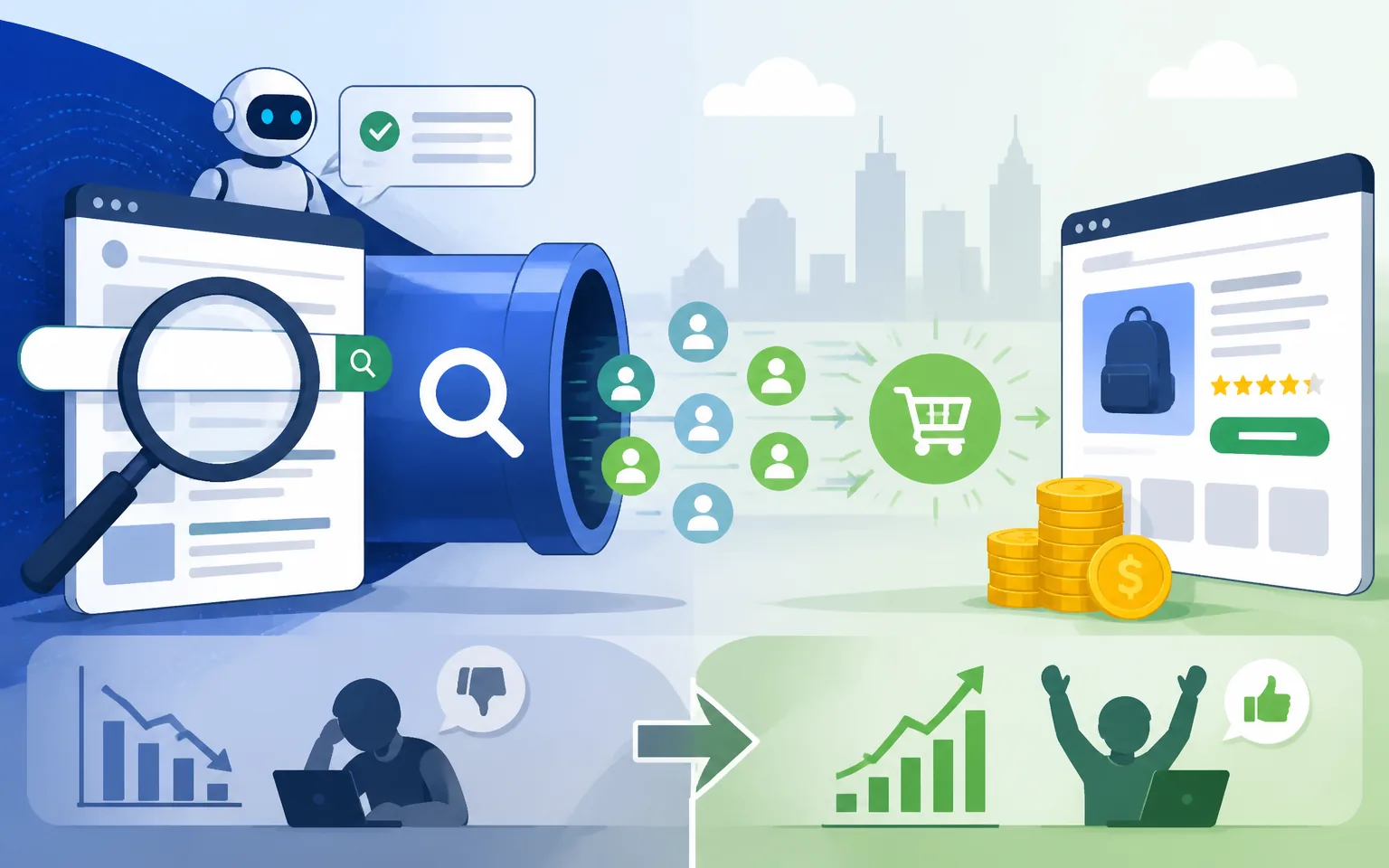
Despite all the noise about social and video, nearly 80% of affiliates still rely on SEO as a primary traffic source, per Demandsage’s 2026 affiliate marketing report. And it is not just habit: across sectors, organic search still delivers over 50% of affiliate-referred traffic on average, according to wecantrack’s industry analysis. No other channel combines that scale with that level of purchase intent.
So the opportunity has not shrunk. What has changed — dramatically — is the cost of doing it badly. Mediocre affiliate content that skated by in 2023 gets zero clicks in 2026, because the machine answers mediocre questions now. Let me show you the data.
The New Click Economics: What AI Overviews Actually Changed
I track this closely because my income depends on it. The most rigorous study I have seen is Seer Interactive’s analysis of 53 brands, 5.47 million tracked queries and 2.43 billion impressions from January 2025 through February 2026. Their finding: organic CTR on queries with an AI Overview sat at just 0.61%, versus 1.62% when no AI Overview appeared — a 61% compression in click-through rate.
Ahrefs reached a similar conclusion from a different angle, finding that the presence of an AI Overview correlates with a 58% lower average click-through rate for the top-ranking page. Pew Research’s panel study was even starker at the user level: only 8% of users click an organic result when an AI Overview appears, compared with 15% when one does not.
The knock-on effect is a surge in zero-click sessions. One field study found that zero-click searches rose from 54% to 72% of queries where AI Overviews were triggered. Nearly three out of four searchers never leave Google at all.
Before you close the tab in despair, two counterpoints. First, the trend is not a straight line down: AI Overview click-through rates bottomed at 1.3% in December 2025 and climbed to 2.4% by February 2026, an 85% rebound in two months, per Search Engine Land’s coverage of recent CTR studies. Users are adapting, and Google keeps tuning how often Overviews appear. Second — and this is the core of my strategy — brands cited inside AI Overviews earn 35% more organic clicks than those that are not, according to aggregated 2026 AI Overview statistics. The clicks did not vanish; they got redistributed to sources the AI trusts. My job is to be one of those sources.
Step One: Rebuild Keyword Strategy Around Money Intent
The first thing I did was ruthlessly re-segment my keyword targets. I no longer chase informational head terms like “what is email marketing” — AI Overviews answer those completely, and they never converted well for affiliate offers anyway. Instead, I concentrate on query classes where the searcher must click to get what they want.
The long tail is now the whole game
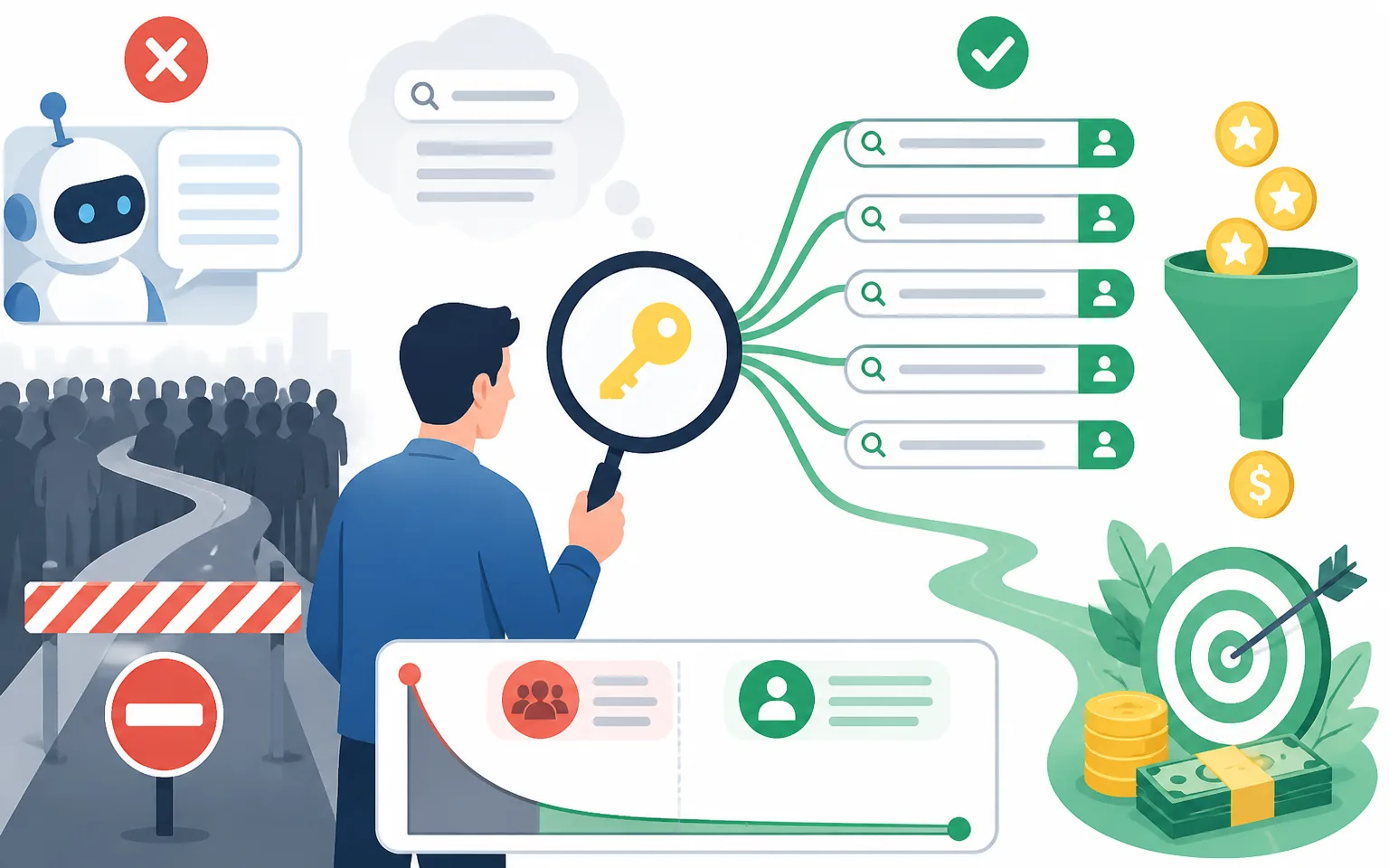
Roughly 95% of all search queries are long-tail keywords getting ten or fewer searches per month, according to Ahrefs’ keyword research. That sounds like scraps until you look at intent: long-tail keywords convert at an average rate of 36%, per Embryo’s compilation of long-tail statistics — several multiples of what generic head terms deliver. For an affiliate, one visitor who searches “best email platform for a food blog under fifty dollars” is worth fifty visitors who search “email marketing.”
Meanwhile, the head of the curve is a trap for small publishers: just 0.16% of keywords account for around 60% of total search demand, and those terms are dominated by giants and answered by AI. I let them have it. If you want my full research workflow, I documented it in my guide to keyword research for SEO — everything there still applies, I just apply it further down the tail now.
Query classes AI cannot satisfy
These are the intents I prioritize, in order: comparison queries (“X vs Y for [specific use case]”), suitability queries (“is X good for [audience]”), price-and-deal queries, setup and troubleshooting queries for tools I promote, and alternative-seeking queries (“X alternatives for [constraint]”). In every one of these, a generic AI summary is unsatisfying — the searcher wants specifics, screenshots, current pricing and a verdict from someone who has used the product. That is a click I can still win.
Step Two: Content That Earns Clicks and Citations
Ranking is no longer the finish line; being worth clicking is. Every money page I publish now has to pass three tests.
Show first-hand use or don’t publish
Google’s reviews system explicitly rewards evidence of hands-on experience, and so do readers. My reviews include my own screenshots, my actual dashboard numbers where I can share them, and the specific limitations I hit. This is also my moat against AI-generated affiliate spam: a language model can paraphrase a feature list, but it cannot take a screenshot of month three of real usage. When I refreshed my older reviews to add first-hand evidence, several recovered rankings they had lost — I wrote about that process in my content decay and refresh guide.
Structure for extraction — deliberately
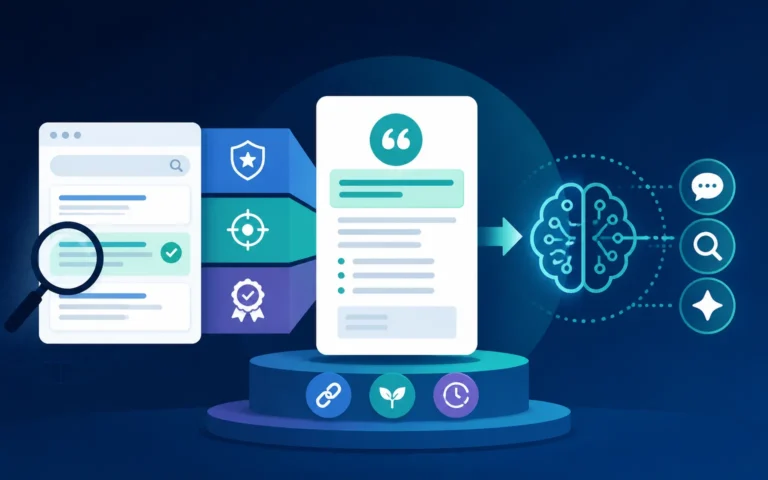
It sounds backwards, but I now write so that AI systems can lift my key facts cleanly: a short verdict paragraph at the top, comparison tables with consistent columns, spec lists, clearly labeled pros and cons. Remember the statistic from earlier — cited brands earn 35% more organic clicks. Extraction-friendly structure is how you get cited. The AI quotes your verdict, names your site, and the high-intent reader clicks through for the detail. I covered the full tactical checklist in my guide to GEO and AEO: optimizing content for AI search.
Add information gain
Every page needs at least one thing that exists nowhere else: an original test result, a pricing calculation for a specific scenario, a migration checklist, a template. If a page is purely a remix of the top ten results, an AI Overview replaces it perfectly — because that is literally what an AI Overview is.
Step Three: Architecture — Clusters, Internal Links and Trust
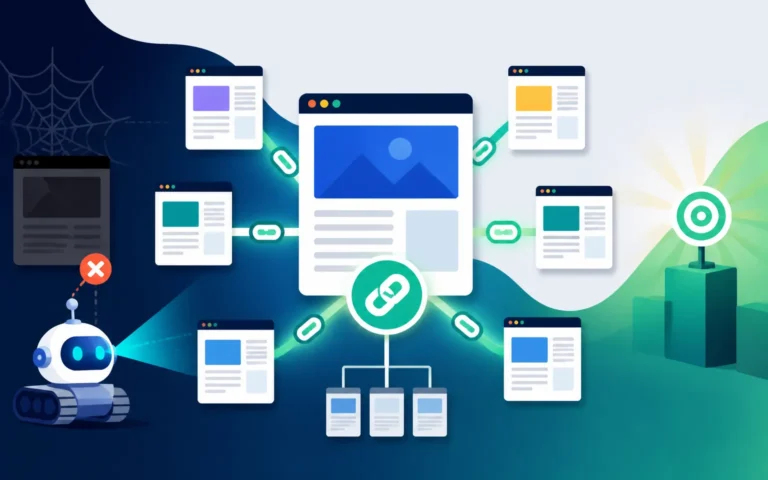
Individual pages do not rank affiliate terms anymore; topical clusters do. For every offer category I promote, I build a pillar page plus supporting reviews, comparisons and how-tos, all interlinked with descriptive anchors. The structure signals to both Google and AI systems that the site has genuine depth on the topic. I detailed my exact approach in the topical authority pillar-cluster playbook, and the linking mechanics in my internal linking strategy guide.
One technical detail people skip: tag the affiliate links themselves. Google’s guidance on qualifying outbound links says sites in affiliate programs should mark those links rel="sponsored", whether they were placed manually or injected dynamically.
It costs nothing and removes any ambiguity about whether you are selling links. I audit for untagged affiliate links every quarter, because plugins and link cloakers quietly drop the attribute on update.
Three architecture rules I follow religiously. First, money pages never sit orphaned — each comparison and review receives links from at least three informational posts in the same cluster. Second, disclosure is prominent and consistent, because trust signals are ranking signals in the reviews ecosystem. Third, I keep affiliate link management centralized so I can swap or fix offers site-wide in minutes instead of hunting through old posts.
Step Four: Diversify the SERP Itself
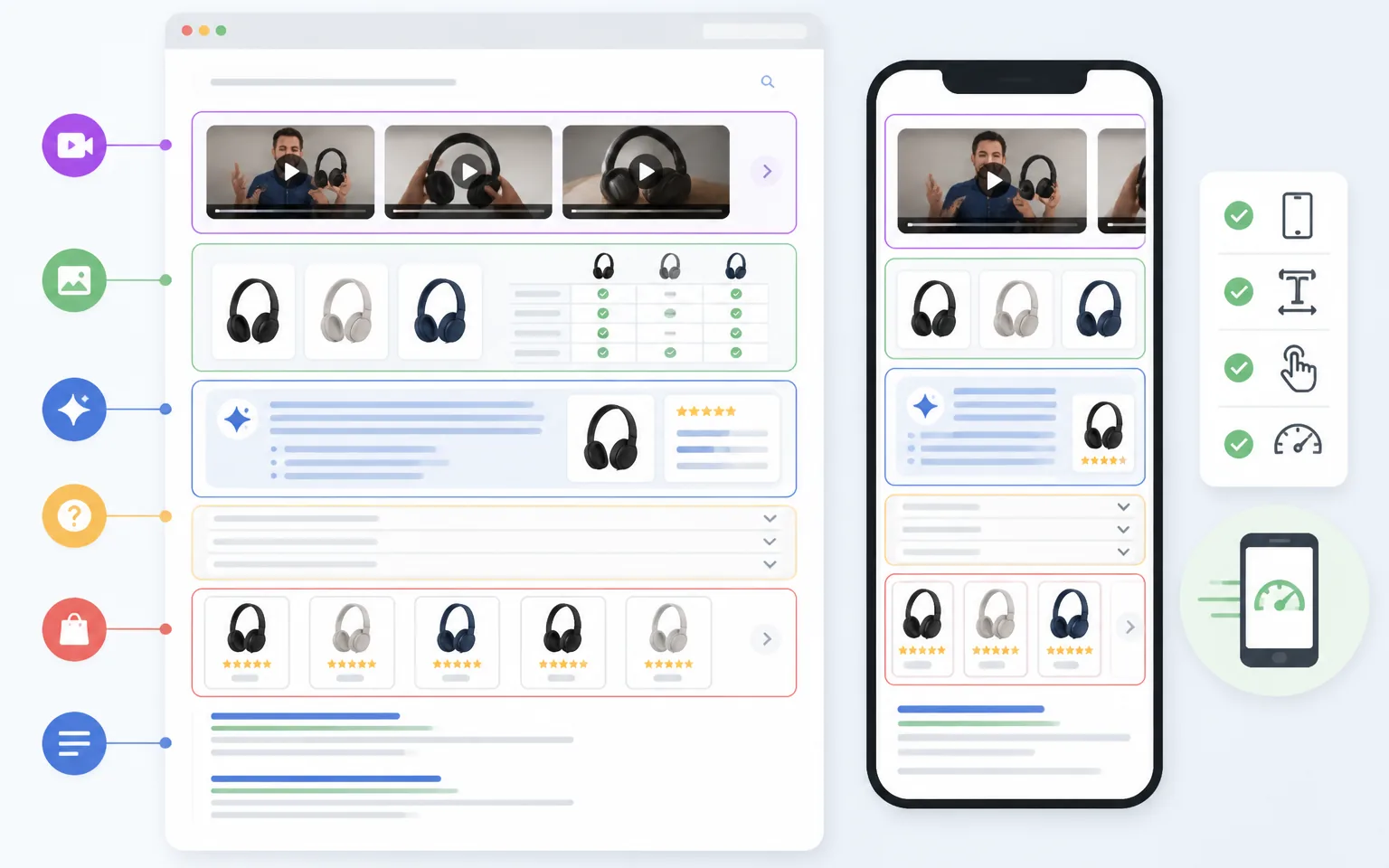
When the classic blue link gets fewer clicks, I show up in more places on the same results page. Product review videos embedded on the page can rank in video carousels. Original comparison images and tables surface in image results and AI Overview panels. Schema markup — Review, Product, FAQ and ItemList — gives Google structured hooks for rich results. None of these are new tactics, but their relative value has jumped now that the standard organic listing yields less. And since mobile devices generate 62% of affiliate-referred traffic according to industry tracking data, I check every money page on a phone before publishing: table readability, button size, page speed. A comparison table that requires horizontal scrolling on mobile is a conversion killer.
If you use AI tools in your production workflow — and I do, heavily — the goal is scale without slop. My system for that is in my guide on how to scale affiliate marketing with AI: AI accelerates research, outlines and updates, while the testing, opinions and verdicts stay human.
Step Five: Measure Revenue Per Visit, Not Traffic
The metric shift matters as much as the tactics. I used to celebrate traffic growth; now I track earnings per visit, click-to-offer rate, and citation presence for my priority queries. A post can lose 40% of its traffic to AI Overviews and earn more money than before, if the visitors it keeps are the high-intent ones — and that is exactly the pattern I see. Informational tire-kickers get absorbed by the AI; buyers still click. My quarterly review now asks three questions per money page: is it cited in AI answers for its target queries, is its revenue per visit rising, and does it still contain something no competitor has?
Mistakes I See Affiliate Sites Still Making
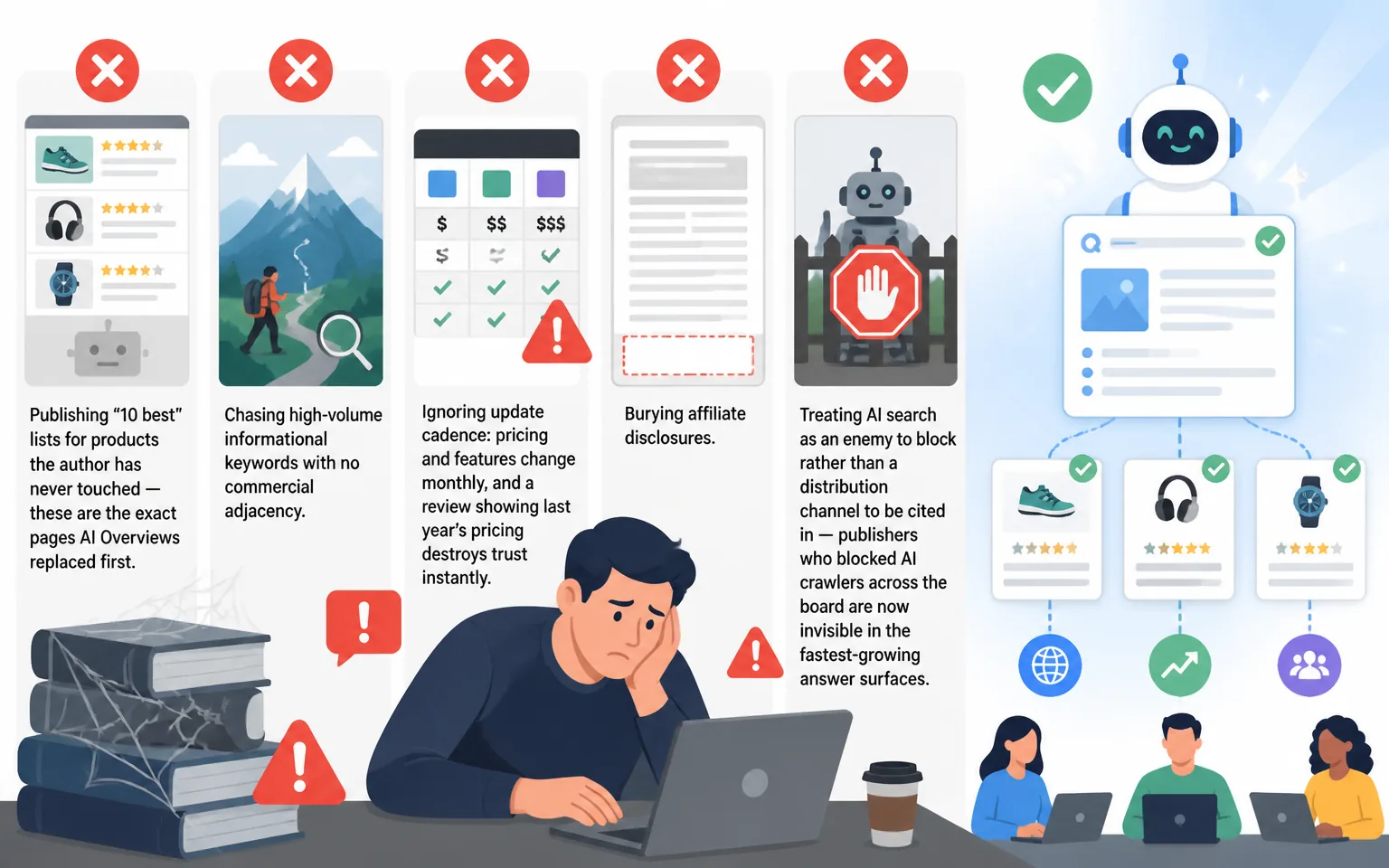
A few patterns that reliably fail in 2026. Publishing “10 best” lists for products the author has never touched — these are the exact pages AI Overviews replaced first. Chasing high-volume informational keywords with no commercial adjacency. Ignoring update cadence: pricing and features change monthly, and a review showing last year’s pricing destroys trust instantly. Burying affiliate disclosures. And treating AI search as an enemy to block rather than a distribution channel to be cited in — publishers who blocked AI crawlers across the board are now invisible in the fastest-growing answer surfaces.
FAQ: Affiliate SEO in the AI Search Era
Is affiliate SEO still worth starting from scratch?
Yes, but the entry bar is higher. With the industry at roughly $28 billion and organic search still driving over half of affiliate traffic, the demand is there. New sites should pick a tight niche, build one deep topical cluster, and lead with genuine hands-on reviews rather than volume.
How much traffic have affiliate sites lost to AI Overviews?
It varies by query mix. Studies show organic CTR drops of 38% to 61% on queries where AI Overviews appear. Sites heavy on informational content were hit hardest; sites focused on comparisons, reviews and buyer-intent queries lost far less, because those searches still require a click to be satisfied.
Should I optimize for being cited in AI Overviews?
Absolutely. Cited brands earn 35% more organic clicks. Use clear verdict statements, structured comparisons, consistent entity naming and FAQ schema so AI systems can extract and attribute your content cleanly.
Do long-tail keywords still matter if volumes are tiny?
More than ever. Around 95% of queries are long-tail, and they convert at roughly 36% on average. Twenty long-tail pages that each bring a handful of buyers weekly will out-earn one head-term page that brings tire-kickers — and they are far easier to rank.
How often should I update affiliate content?
I re-verify pricing and features on every money page at least quarterly, and immediately after any major product change. Freshness is both a ranking factor and a trust factor — an outdated price is the fastest way to lose a commission you already earned.
Final Thoughts
Affiliate SEO did not die when AI Overviews arrived; lazy affiliate SEO did. The publishers still growing in 2026 — and I count myself among them, some months more comfortably than others — are the ones who accepted the new click economics and repositioned: down the tail where intent lives, deep into first-hand evidence AI cannot fake, structured for citation rather than fighting it, and measured on revenue per visit instead of vanity traffic. The machine answers the easy questions now. Your job is to own the questions that still deserve a click — because those were always the ones that paid.