How to Grow Your Email List with AI Lead Magnets in 2026

Why I Stopped Chasing Followers and Started Building an Email List Again
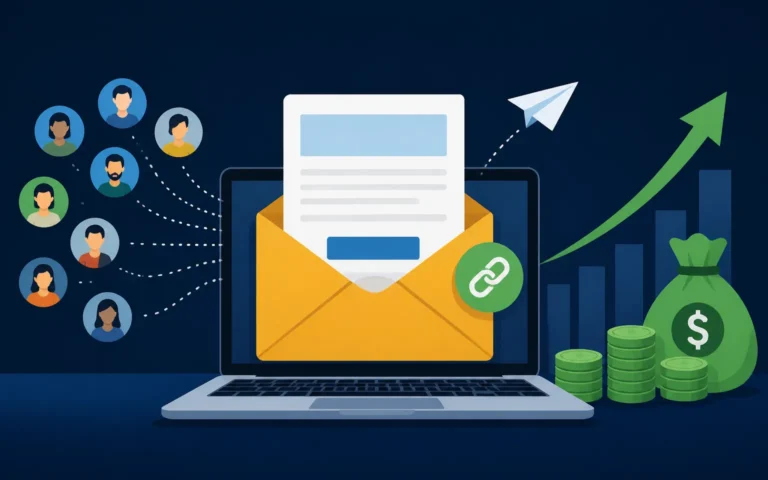
A few years into running byskh.com, I had a realization that changed how I think about marketing: every follower I had on social platforms was rented, but every email address on my list was owned. When a platform tweaks its algorithm overnight, your reach can vanish. Your email list does not disappear with an algorithm change. That single insight is why I keep coming back to email, and in 2026 the case is stronger than ever. Email marketing still returns somewhere between $36 and $45 for every $1 spent, according to WSI’s 2026 analysis, and for US ecommerce merchants on platforms like Omnisend that figure climbs as high as $72 per dollar. No other channel I have tested comes close to that kind of efficiency.

Whatever lead magnet you offer, make sure the follow-up emails comply with the FTC’s CAN-SPAM rules for commercial email — accurate sender details, honest subject lines, and an easy way to unsubscribe.
But here is the catch that trips up most people: the ROI numbers everyone quotes assume you actually have a list worth emailing. A brilliant welcome sequence sent to an empty list earns you nothing. So this guide is about the part nobody romanticizes — the unglamorous, compounding work of building an email list — and how AI has quietly made that work faster, cheaper, and more effective than it has ever been. I am going to walk you through exactly how I use AI to design lead magnets, write opt-in copy, and qualify subscribers, with real benchmarks so you can judge what good looks like.
The State of Email List Building in 2026
Let me ground us in reality before we get tactical. The global email user base passed 4.48 billion people in 2026, up from 4.37 billion in 2023, and it is projected to reach 4.85 billion by 2027, per Demandsage’s 2026 data. The audience is not shrinking — it is the largest it has ever been. The problem is not reach. The problem is relevance and quality.
Here is the stat that reframed my whole approach: brands that regularly personalize their email achieve a 43:1 ROI, while brands that rarely or never personalize achieve just 12:1 — a 258% gap attributable almost entirely to relevance, according to SQ Magazine’s 2026 personalization research. Relevance starts at the moment of opt-in, not at the moment of send. If you attract the wrong people with a generic freebie, no amount of clever automation downstream will fix the mismatch.
And lead quality is genuinely getting harder. A striking 58.4% of marketers now rank improving lead quality as more difficult than growing lead volume, up from under 50% a year earlier, based on Email Vendor Selection’s 2026 lead generation report. That shift is the entire reason AI matters here. We are no longer competing to collect the most emails — we are competing to collect the right emails, faster, and AI is unusually good at that specific job.
Lead Magnets: The Engine of List Growth
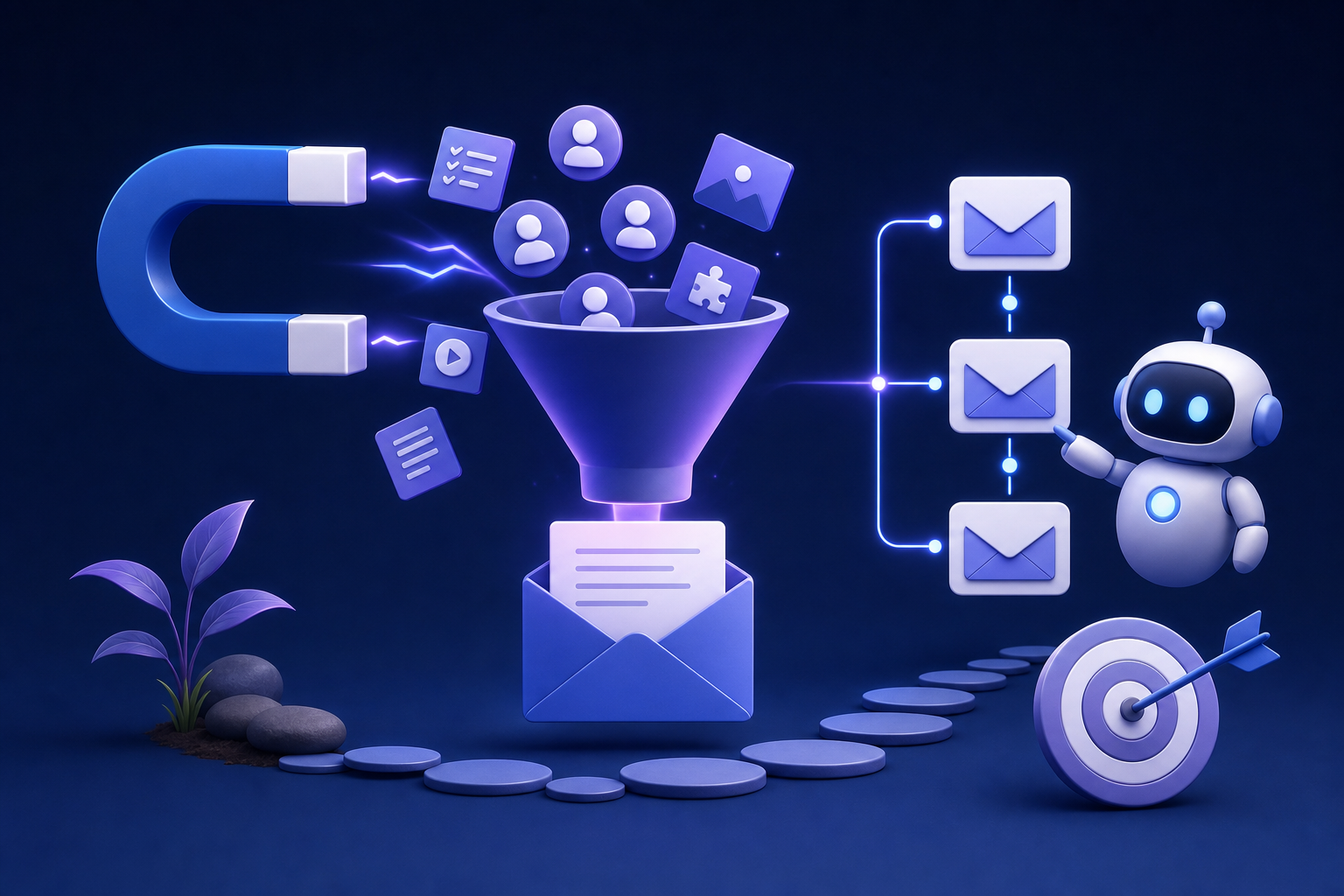
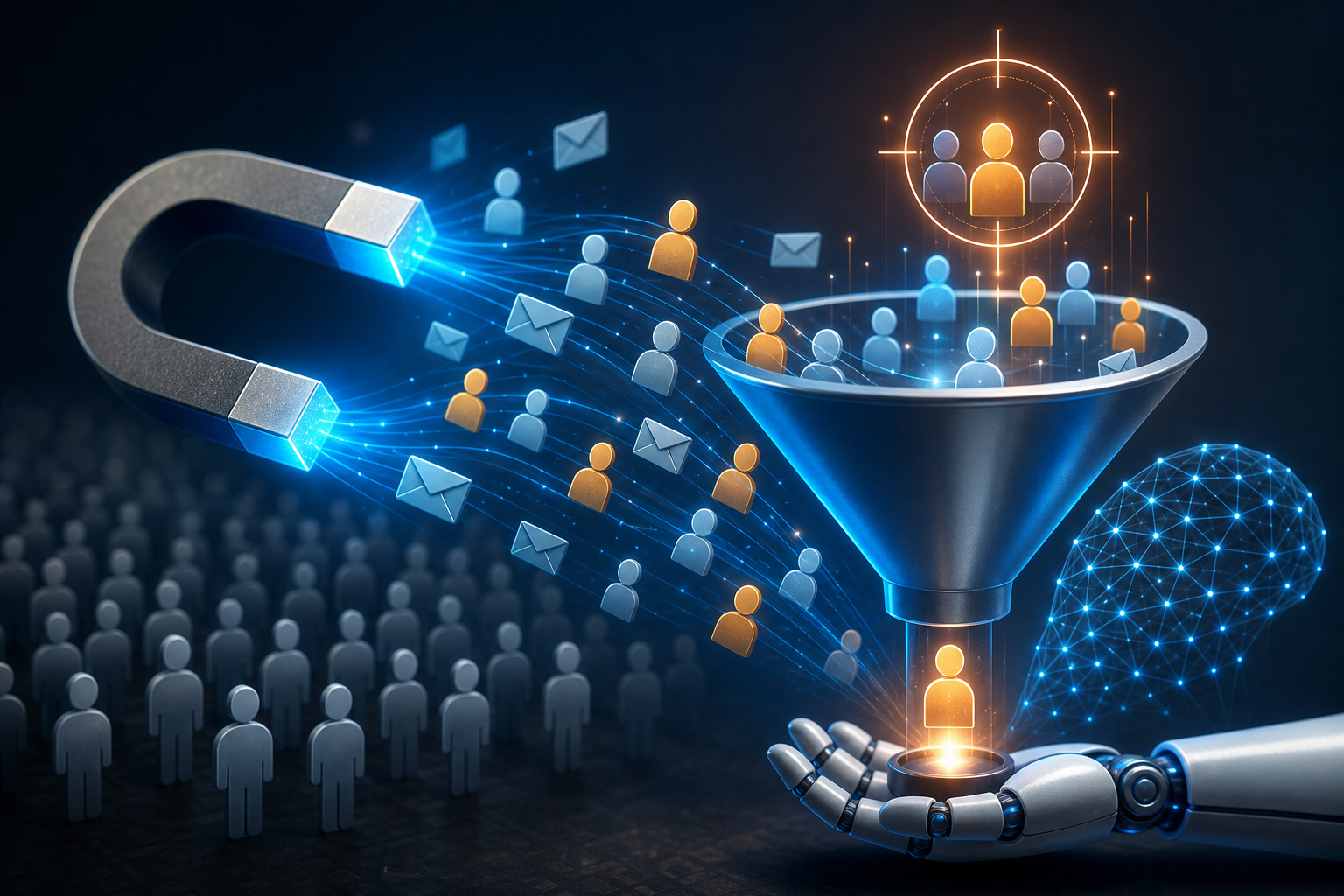
A lead magnet is simply something valuable you give away in exchange for an email address. The format matters enormously. When MailerLite analyzed more than 41,000 opt-in forms, they found that not all magnets are created equal — and the gap between formats is brutal. eBook opt-in rates have collapsed below 0.9% in many industries, while interactive tools regularly clear 5% and beyond, according to lead magnet conversion data compiled by Amra & Elma for 2026.
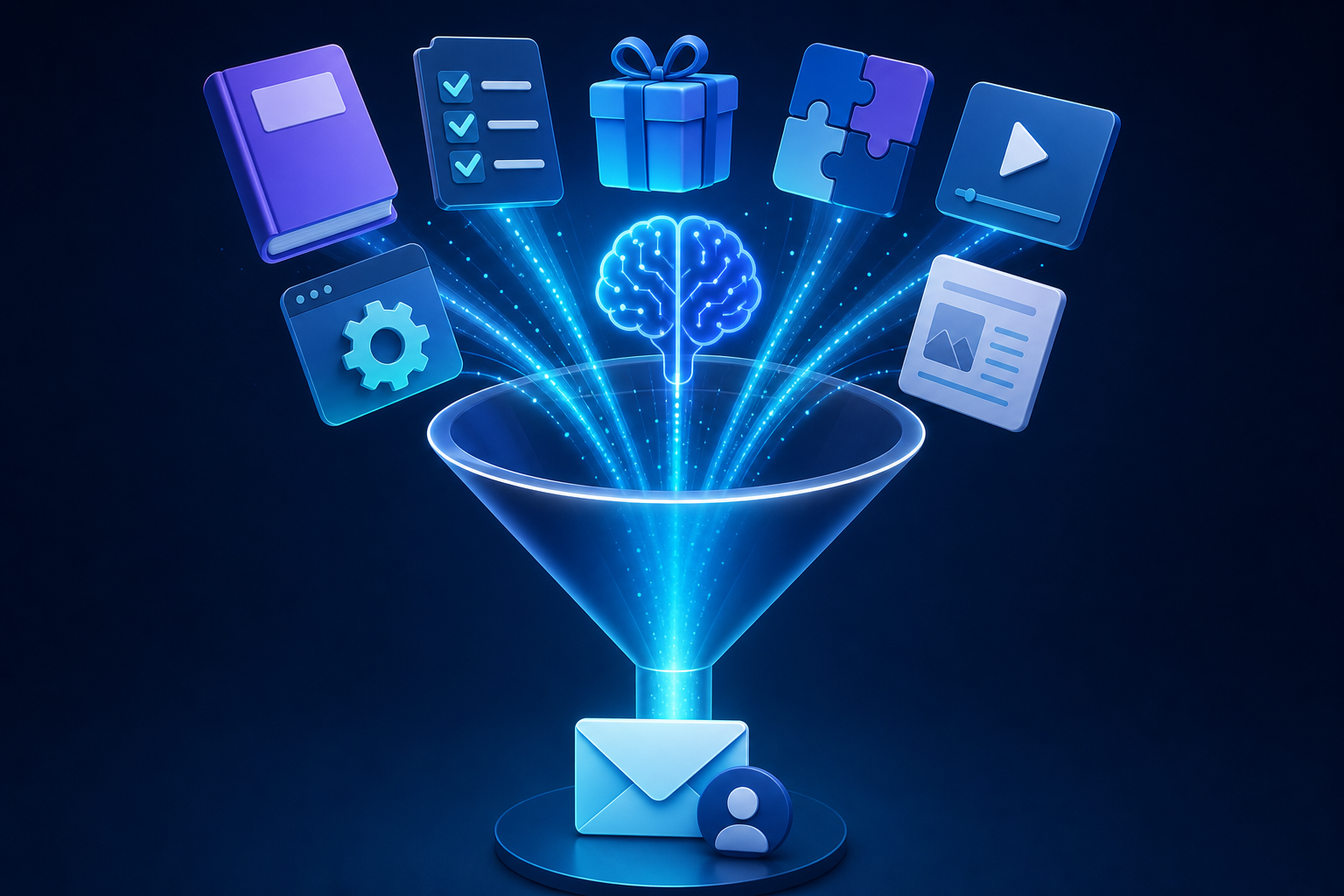
Why the collapse? Because the internet is drowning in generic PDFs. The all-industry median conversion rate across lead magnet landing pages sits at 6.6%, but the spread around that median is enormous depending on what you offer and how specific it is. Niche lead magnets convert three to five times better than generic ones, and that is the single most actionable fact in this entire article.
The Formats That Actually Convert in 2026
Based on the current benchmarks, here is how the major formats stack up. Interactive quizzes and self-assessment tools are the runaway winners — AI-driven quizzes and personalized assessments report a 78% average lift in lead capture compared to static benchmarks, and interactive, self-scoring formats routinely land opt-in rates in the 25% to 40% range. Checklists and calculators sit near the top for the same reason: they deliver an instant, personalized result. Guides remain surprisingly strong among written formats, converting at 67.2% in some studies because they promise a complete answer rather than a teaser. Webinars and micro-courses average around 27.4%, and giveaways top out near 29.37% but tend to attract lower-intent subscribers.
The lesson I draw from this is consistent with what I cover in my piece on best email marketing practices and tools: the more your magnet feels like relief rather than advice, the better it converts. “Free guide to grow your email list” reads like advice. “15-minute welcome sequence that turns new subscribers into booked calls” reads like relief. Same topic, wildly different opt-in rates.
How I Use AI to Create Lead Magnets in Minutes
This is where the economics flip. Historically, a good lead magnet meant hiring a designer, briefing a writer, and waiting two weeks. In 2026, AI lead magnet creators generate a formatted, branded PDF from a single text prompt in under two minutes. Tools in this category can produce cover design, chapter structure, and clean export with almost no design experience required.
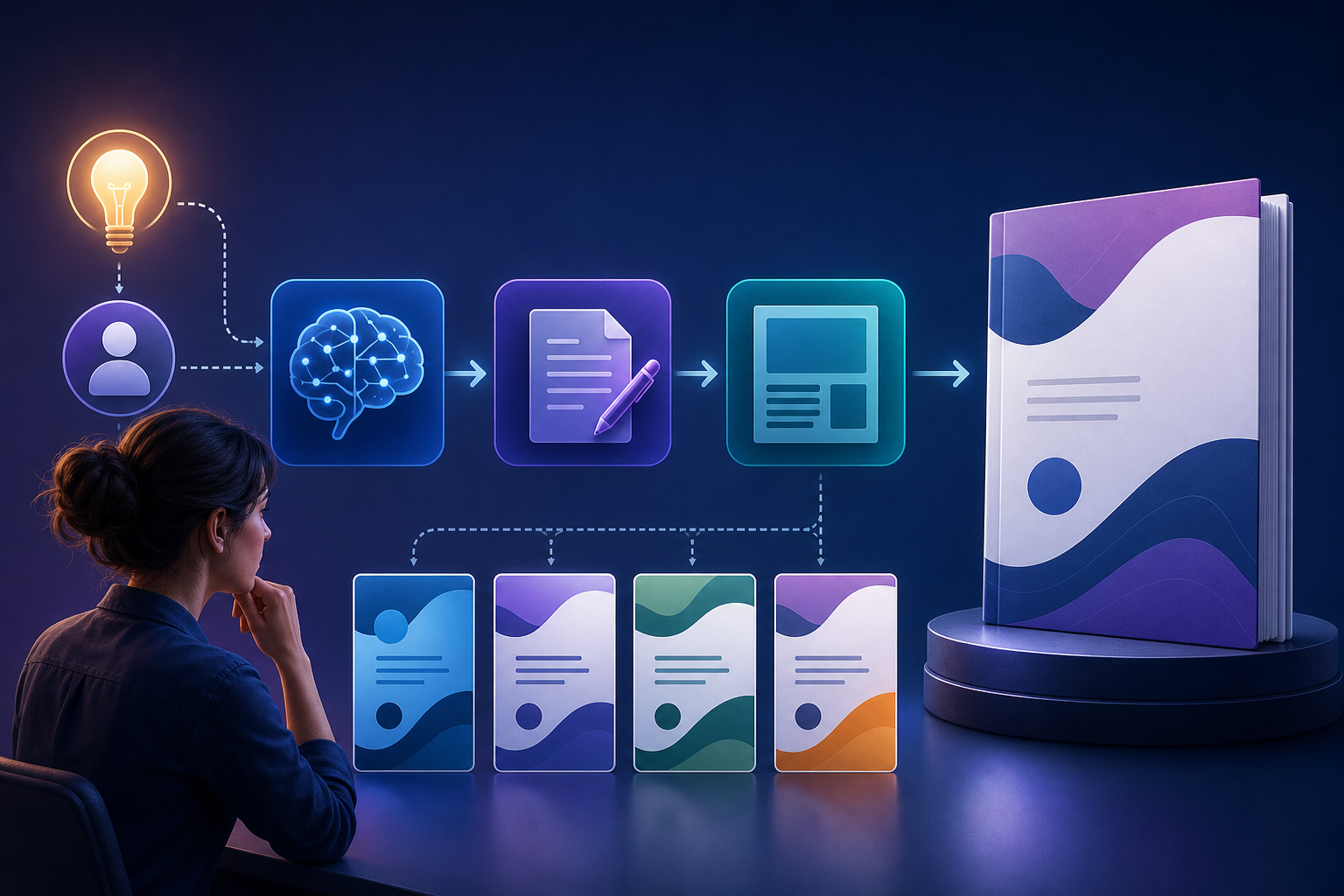
My workflow looks like this. First, I decide on the specific problem and the specific person — not “email marketing” but “solo coaches who want their first 100 subscribers.” Second, I prompt an AI writing tool to draft the magnet’s outline and copy, feeding it my own framework so it sounds like me rather than generic filler. Third, I run that copy through an AI lead magnet generator to handle layout and design. Fourth — and this is the step most people skip — I have AI generate three to five variations of the title and the opt-in headline so I can test them.
That speed advantage is not just convenience. In 2026 conversion comes from relevance, not polish, and a focused magnet that ships today beats a perfect one that ships next month. AI removes the production bottleneck that used to make “ship today” impossible. I go deeper on the trade-offs of these tools in my breakdown of AI-powered email marketing tools and their pros and cons, because the speed is real but the quality still depends entirely on the framework you feed the machine.
Building Interactive Magnets With AI
If quizzes and calculators convert best, the obvious question is how to build them without a developer. This is the part of the stack that improved most dramatically. Interactive funnel platforms now combine a quiz or assessment builder with a built-in CRM and analytics, so the journey from ad click to magnet delivery happens in one place. AI assists at every step: generating the quiz questions, scoring logic, and the personalized result copy that makes the subscriber feel seen.
The payoff is measurable. 91% of buyers now prefer interactive content over static formats, and personalized video clips outperform generic ones by 41%, hitting an average short-form conversion rate of 66.2% versus 55.7%, per the 2026 lead magnet conversion benchmarks. When something this much more effective is also this much easier to build than it was two years ago, ignoring it is a strategic mistake.
Writing Opt-In Copy and Placement With AI
A great magnet with weak copy still underperforms. The opt-in form, the headline, and the placement do the heavy lifting of turning a curious reader into a subscriber. AI helps me here in two concrete ways.
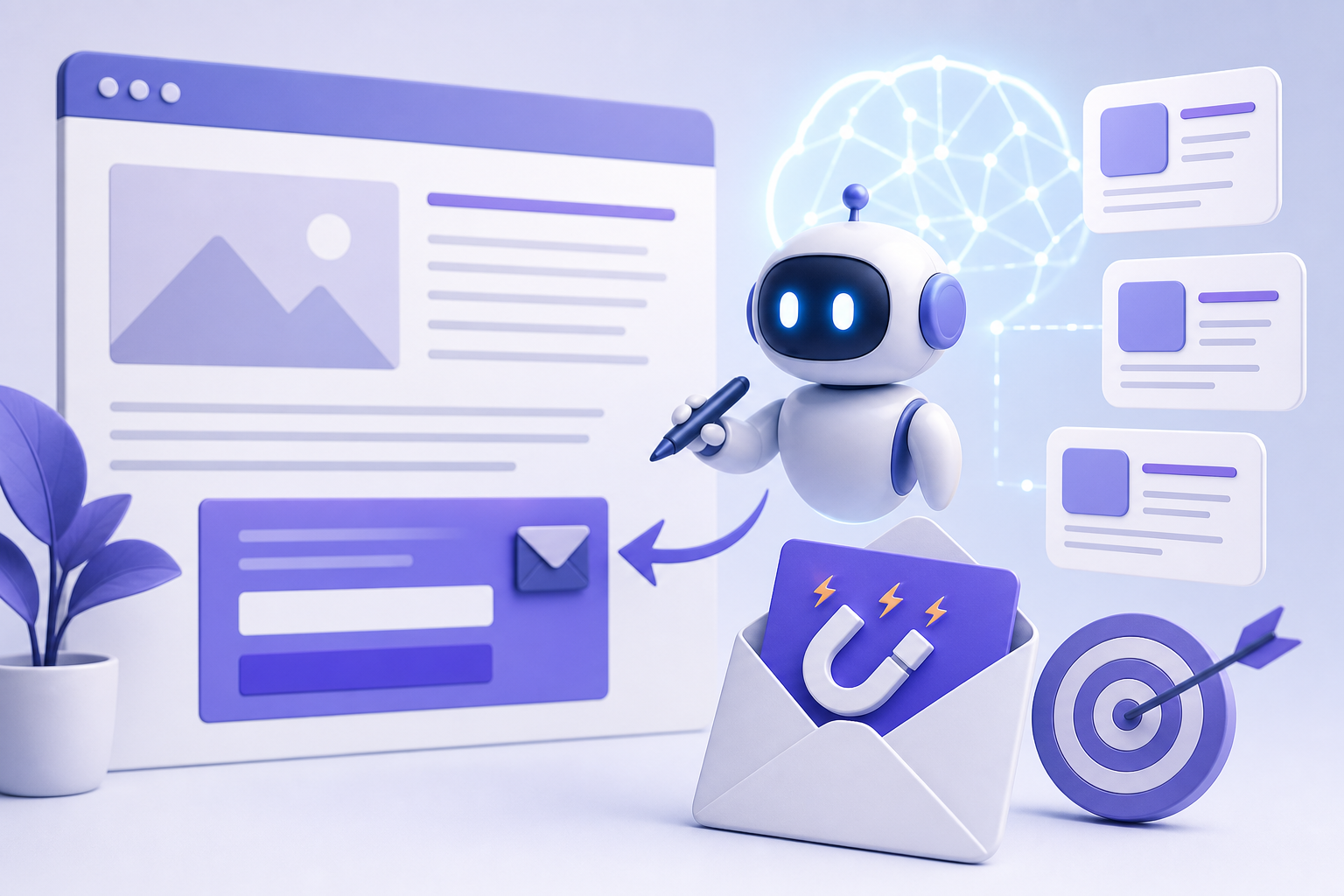
First, subject-line and headline optimization. Organizations using AI to generate and optimize subject lines see a 26% increase in open rates compared to manually written alternatives, according to the 2026 email personalization data. I apply the same logic to opt-in headlines — I generate a batch of variations, then test the top three rather than agonizing over one guess.
Second, placement. Lead magnets convert best when the reader is already thinking about the problem you solve. The simplest high-converting placement is an opt-in directly below a related blog post or inside a relevant tool page, where context makes signing up feel like a natural next step rather than an interruption. I let AI analyze which of my posts attract the most engaged readers and then match a tightly relevant magnet to each one. This is the same relevance principle that drives strong retention marketing strategies — meet people where their attention already is.
From Subscriber to Qualified Lead: AI Lead Scoring
Collecting an email is the start, not the finish. The real money is in what happens next, and this is where AI has quietly become indispensable. Companies deploying AI-powered lead scoring reduced their average time-to-qualified-lead by 6.3 days and cut unqualified lead rates by 31.7%, based on the 2026 lead generation statistics. Translated into plain terms: AI helps you spend your follow-up energy on the people most likely to buy, instead of treating every subscriber identically.
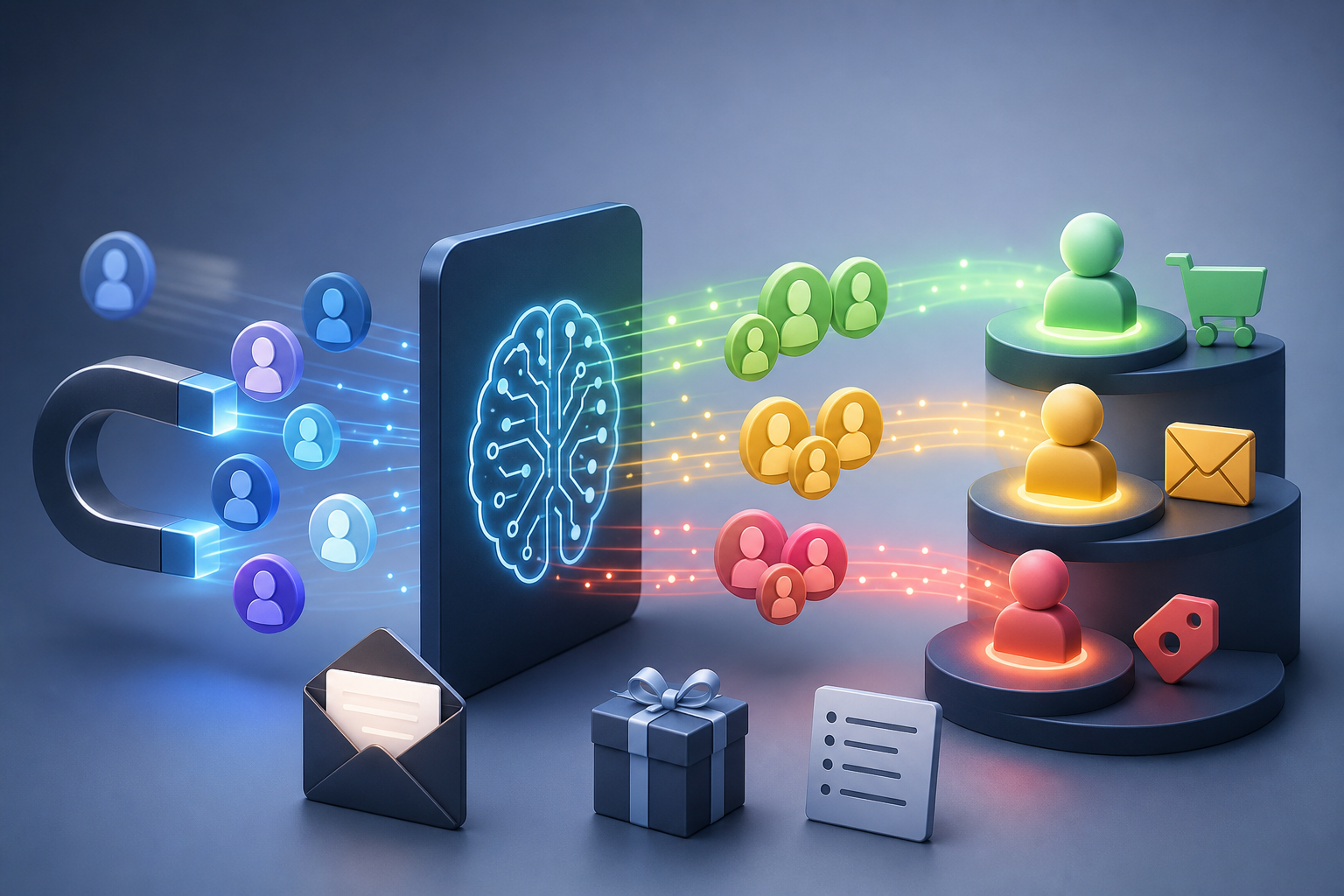
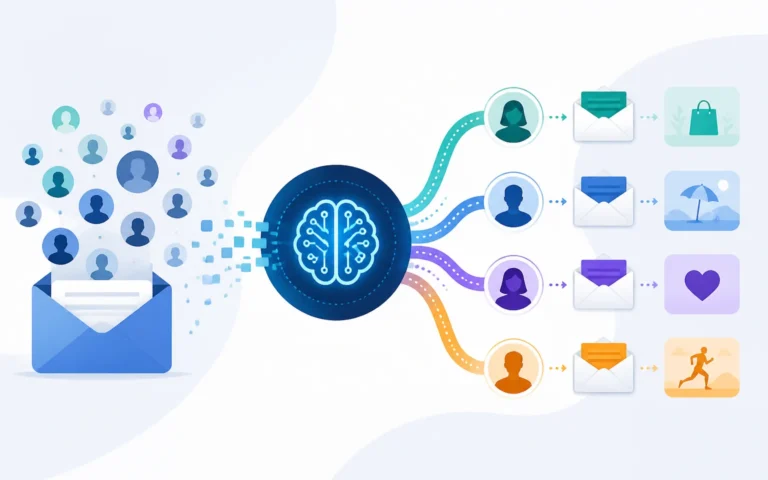
The mechanism is segmentation at the point of entry. Because each lead magnet signals a specific interest, you can automatically tag and segment subscribers based on what they opted into, then route them into tailored follow-up. Revenue growth is reportedly 40% faster for AI-personalized campaigns, and lead qualification time runs 234% faster with AI-driven emails, per the 2026 personalization research. None of that works without clean segmentation, and clean segmentation starts with a specific magnet that tells you exactly why someone joined.
The Welcome Sequence That Turns Subscribers Into Customers
Once someone joins, the first 14 days decide whether they become a buyer or a ghost. The standard high-performing welcome sequence runs five to seven emails over about two weeks. The golden rule is relevance: reference the exact thing they came for, not a generic newsletter blast. If someone downloaded your checklist on email deliverability, your follow-up should deepen that thread — which is why I keep a companion piece on common email delivery issues ready to send to exactly that segment.
I let AI draft the skeleton of each sequence email, then I rewrite for voice. AI is excellent at structure and terrible at personality, so I treat it as a fast first-draft engine, never as the final word. The combination — AI speed plus human voice — is what lets a one-person operation run the kind of sophisticated, segmented nurture that used to require a marketing team.
A Simple Framework You Can Start Today
If you want to put this into practice this week, here is the sequence I would follow. Pick one specific reader and one specific problem they have right now. Choose an interactive or instantly-useful format — a quiz, a calculator, or a tight checklist — over a long eBook nobody finishes. Use an AI lead magnet generator to produce it in an afternoon. Place the opt-in directly beneath your most-read relevant post. Generate and test three opt-in headlines instead of guessing. Tag every subscriber by which magnet they chose. Then send a five-to-seven email welcome sequence that continues the exact conversation they started.
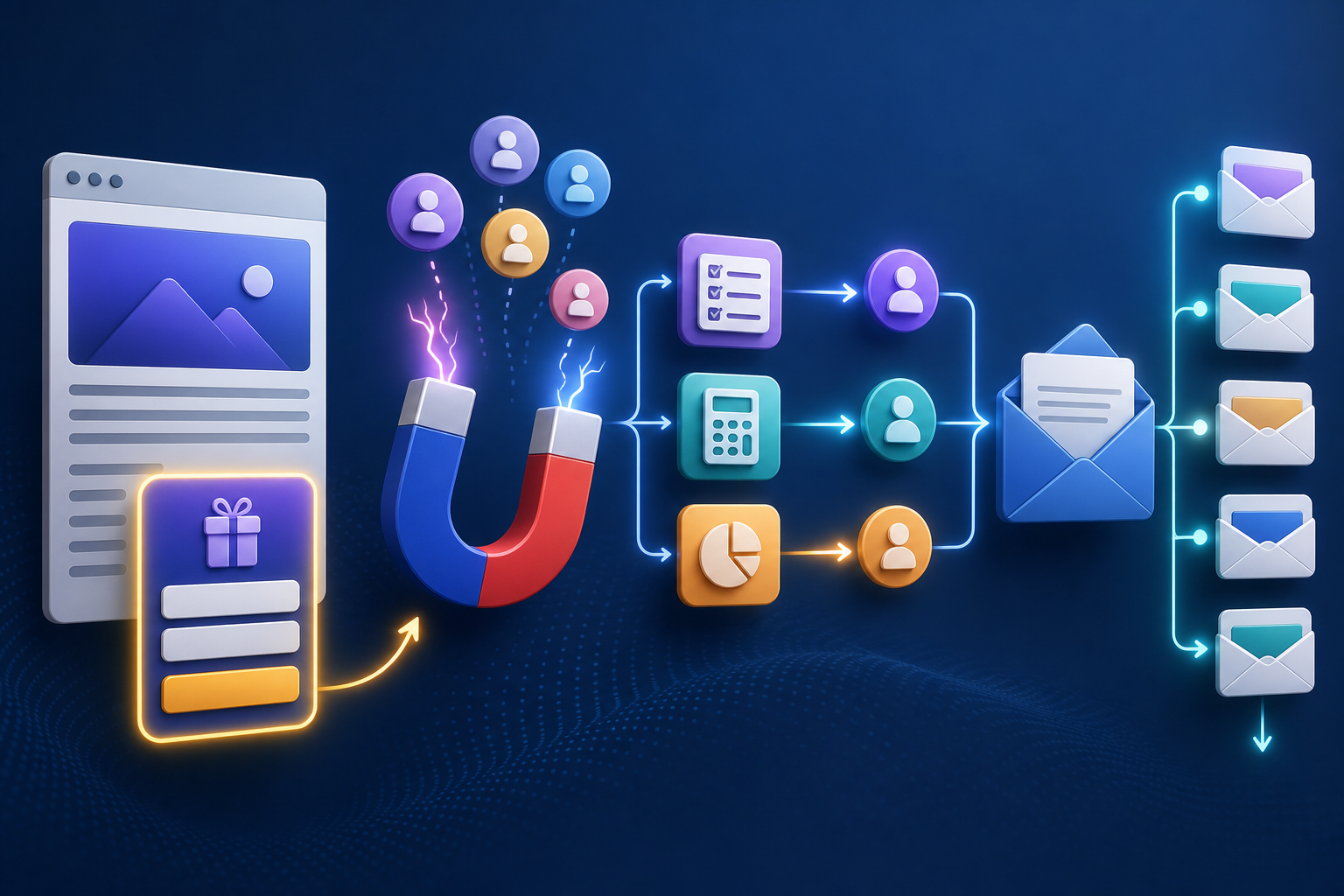
That is the whole machine. It is not complicated, but it compounds. Email leads convert from marketing-qualified to sales-qualified at 46%, far ahead of webinars at 30%, PPC at 26%, and events at 24%, according to the 2026 lead generation data. Every subscriber you add through a relevant magnet is a high-converting asset you own outright.
Frequently Asked Questions
Do AI-generated lead magnets actually convert as well as professionally designed ones?
Yes, and often better — but not because the design is superior. They convert because AI removes the production delay that used to keep marketers from shipping. Since conversion in 2026 comes from relevance and specificity rather than polish, a tightly targeted AI-generated magnet that goes live today routinely outperforms a beautifully designed generic one that took a month. Niche magnets convert three to five times better than generic ones regardless of who designed them.
What is the single best lead magnet format right now?
Interactive quizzes and self-assessment tools. They consistently report opt-in rates in the 25% to 40% range, versus low single digits for static eBooks, and AI-driven assessments show a 78% average lift in lead capture. The reason is simple: they deliver an instant, personalized result, which feels far more valuable than another PDF to add to a downloads folder.
How big does my email list need to be before it matters?
List size matters less than list quality. With personalization driving a 43:1 ROI versus 12:1 for non-personalized programs, a small, well-segmented list of genuinely interested subscribers will out-earn a large, generic one. Focus on attracting the right people with specific magnets rather than chasing a vanity number.
Can AI write my entire welcome sequence?
It can write a strong first draft, but I would not publish it untouched. AI excels at structure and speed and struggles with authentic voice. Use it to draft the skeleton of your five-to-seven email sequence, then rewrite each one so it sounds like a real person continuing the conversation the subscriber started when they opted in.
How do I avoid attracting freebie-seekers who never buy?
Make your magnet specific to the problem your product solves, not a broad giveaway. Giveaways and contests convert at a high 29% but attract low-intent subscribers, whereas a niche, problem-specific magnet attracts people already in buying mode. Pair that with AI lead scoring, which cuts unqualified lead rates by nearly 32%, and you filter quality at both entry and follow-up.
Final Thoughts
Building an email list in 2026 is not about working harder than everyone else — it is about being more specific and faster than everyone else, and AI hands you both. The marketers winning right now are not the ones with the biggest budgets. They are the ones shipping niche, interactive lead magnets this week, testing their opt-in copy instead of guessing, and routing every new subscriber into a relevant, AI-assisted welcome sequence. The 43:1 ROI that email promises is real, but it belongs to the people who do the unglamorous list-building work. Start with one magnet, one reader, one problem. Ship it today. Then do it again next week, and let the compounding do the rest.