AI Agents for Small Business: 2026 Guide

When I started writing about digital marketing, “automation” meant a clunky autoresponder and maybe a Zapier zap that broke every other week. In 2026, the conversation has changed completely. We are no longer talking about software that follows rigid rules. We are talking about AI agents that can read a customer email, decide what to do, take the action, and report back — all without a human pressing a button at each step. As a small business owner myself, I find this both thrilling and a little terrifying, because the gap between businesses that use agentic AI well and those that burn cash on it is getting wide fast.
If the terminology is new to you, IBM’s vendor-neutral overview of what AI agents are and how they work is a clear starting point before you commit any budget.
So let me give you the honest, ground-level version. In this guide I will walk you through what AI agents actually are, where they are delivering real returns for small businesses right now, where they are quietly failing, and a practical step-by-step plan to deploy your first agent without joining the 40% of projects that get scrapped. I have grounded every claim in current 2026 data, because I would rather you make decisions on numbers than on hype.
What Exactly Is an “AI Agent” (and Why 2026 Is Different)
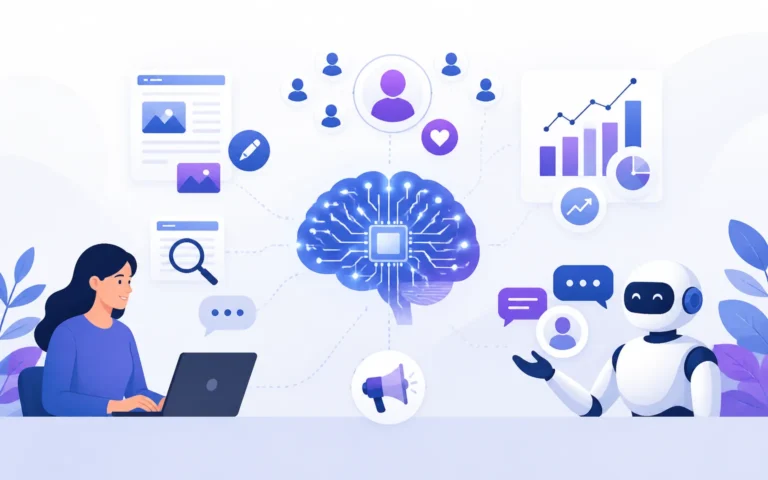
An AI agent is software that uses a large language model as its “brain” to pursue a goal across multiple steps — perceiving information, deciding on an action, executing it through connected tools, and adjusting based on the result. A chatbot answers a question. An agent books the appointment, updates your CRM, sends the confirmation email, and flags you if something looks off. That shift from “answering” to “doing” is the whole story of agentic AI.
The momentum is staggering. Gartner projects that by the end of 2026, 40% of enterprise applications will include task-specific AI agents, up from less than 5% in 2025 — an eightfold jump in roughly a year. That tells you the tools you already pay for are about to ship agents whether you sought them out or not.
This is not just an enterprise story. According to one widely cited 2026 figure, 98% of U.S. small businesses are now using a tool that is enabled by AI in some form, and 83% of small and mid-sized businesses have moved beyond experimentation into production deployments of AI coding agents, compared with 91% for large enterprises. The gap between “the big guys” and “the rest of us” is the narrowest it has been for any major technology wave I have covered.
The market reflects that demand. The agentic AI market is valued at roughly $10.86 billion in 2026, up from $7.55 billion in 2025, and analysts project it reaching $93.20 billion by 2032 at a compound annual growth rate of about 44.6%. When money moves that fast, you get both genuine innovation and a lot of expensive noise — which is exactly why a careful approach matters.
The Money Question: Does Agentic AI Actually Pay Off?
Let’s talk returns, because that is what keeps a small business alive. The headline numbers are real but uneven. Companies that successfully deploy agentic AI report an average ROI of 5.8x within 14 months, according to 2026 adoption research. That is a serious multiple — but notice the word “successfully,” because not everyone gets there.
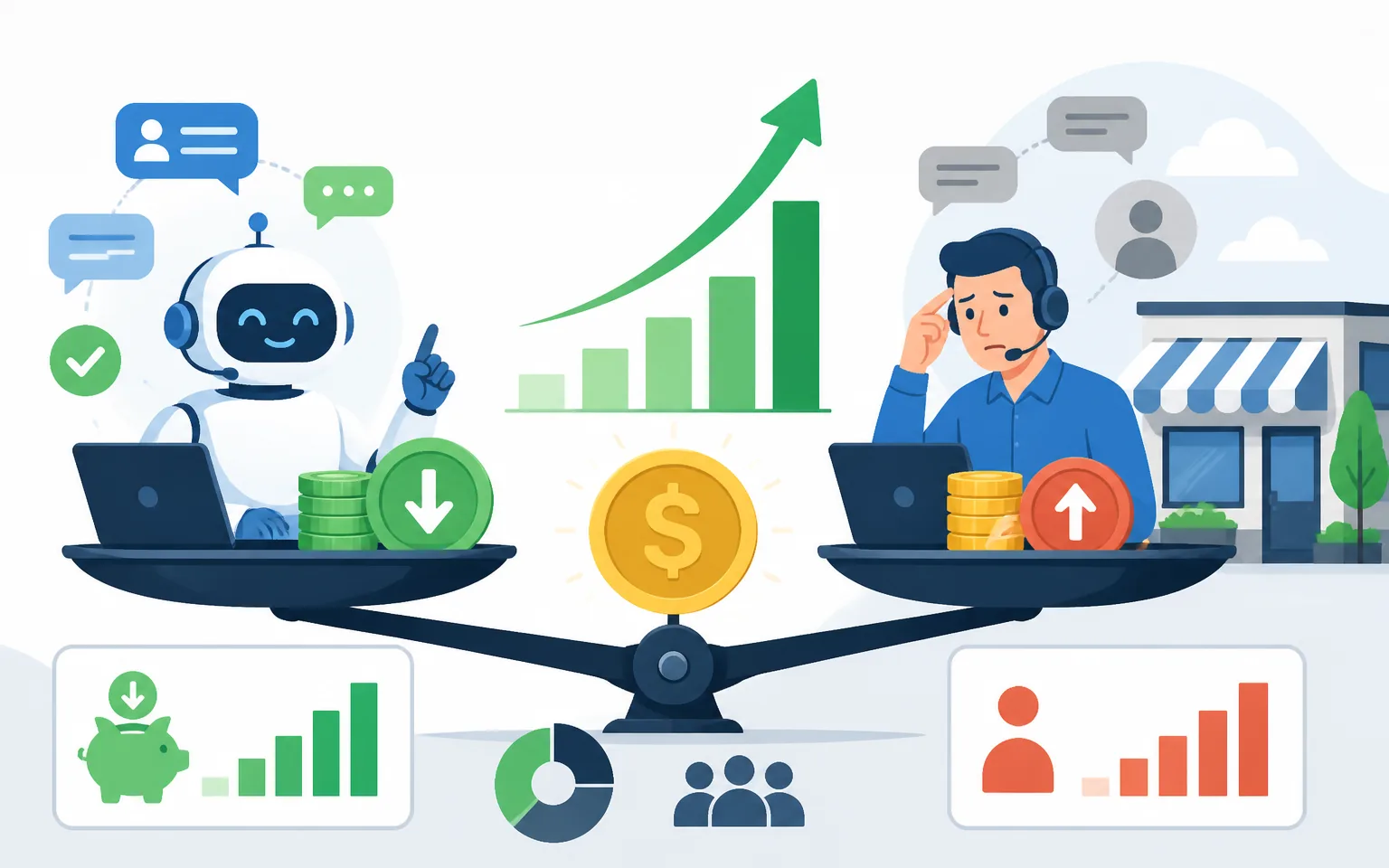
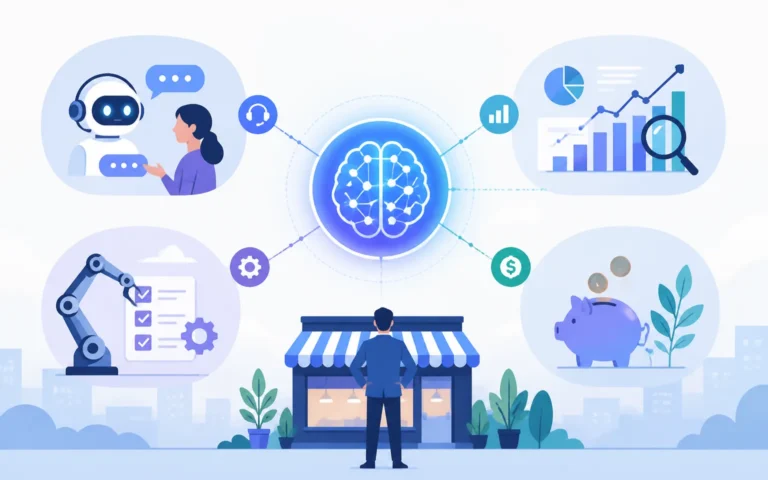
Customer service is where the math is clearest for small teams. Small businesses using off-the-shelf AI customer service tools report average annual savings of $12,000 to $48,000, driven largely by after-hours coverage and deflecting simple, repetitive tickets. On a per-interaction basis, AI customer service runs between $0.50 and $2.00 per resolved ticket, versus $6.00 to $13.50 for a human agent — a gap that compounds quickly once you are handling hundreds of queries a month.
The aggregate picture is just as striking: Gartner projects conversational AI will save $80 billion in contact-center labor costs globally by the end of 2026. And on the investment side, businesses report an average return of $3.50 for every $1 invested in AI customer service, with some organizations hitting 340% ROI in their first year. If you have ever stayed up answering “where is my order?” emails at 11pm, you already understand intuitively why this works.
Time savings show up across the whole business, not just support. Small business employees save an average of 5.6 hours per week using AI tools, with managers saving roughly 7.2 hours versus 3.4 hours for individual contributors. For a lean team, recovering most of a workday each week per person is the difference between treading water and actually growing. I have written before about how the right systems compound over time in my piece on how marketing affects business growth and success, and agentic AI is the newest lever in that same machine.
Where AI Agents Are Winning for Small Businesses Right Now
Not every use case is created equal. After watching dozens of small businesses experiment, here is where I consistently see agents earn their keep in 2026.
1. Customer Support and Ticket Deflection
This is the clearest win. Chatbots and support agents work best for repetitive, predictable queries — order tracking, password resets, account information, shipping updates, and return policies. A small business handling 200–500 support queries per month can see meaningful cost savings within the first quarter of deployment. The agents that perform best are not trying to replace your human touch; they handle the boring 60–70% so your people can focus on the conversations that actually need empathy and judgment.
2. After-Hours and Weekend Coverage
Most of the $12,000–$48,000 in annual savings I mentioned comes specifically from after-hours coverage. A solo founder or a five-person shop cannot staff a 24/7 desk, but an agent can answer at 2am, capture a lead, and queue anything complex for the morning. AI also saves an average of 3.2 hours per agent per day on after-call work like notes, CRM updates, and follow-up scheduling — the invisible admin that eats your evenings.
3. Marketing Operations and Content
Agents now draft email sequences, repurpose blog posts into social snippets, segment lists, and schedule campaigns based on behavior. I covered the foundational side of this in how to use ChatGPT for marketing, and the agentic version takes it a step further by actually executing the workflow rather than just generating a draft. For email specifically, agents that monitor engagement and re-trigger sequences are quietly outperforming static automation.
4. Sales Follow-Up and Lead Qualification
Speed-to-lead is everything in sales, and agents never sleep. An agent can enrich a new lead, score it, send a personalized first touch, and book the call — all before a human would have opened the inbox. For small teams where the owner is also the closer, this removes the single biggest leak in the funnel: leads that go cold while you are busy doing the actual work.
The Other Side: Why 40% of Agent Projects Will Fail
I would be doing you a disservice if I only sold the upside. Gartner predicts that over 40% of agentic AI projects will be canceled by the end of 2027, citing escalating costs, unclear business value, and inadequate risk controls. That is not a fringe failure rate — that is nearly half.
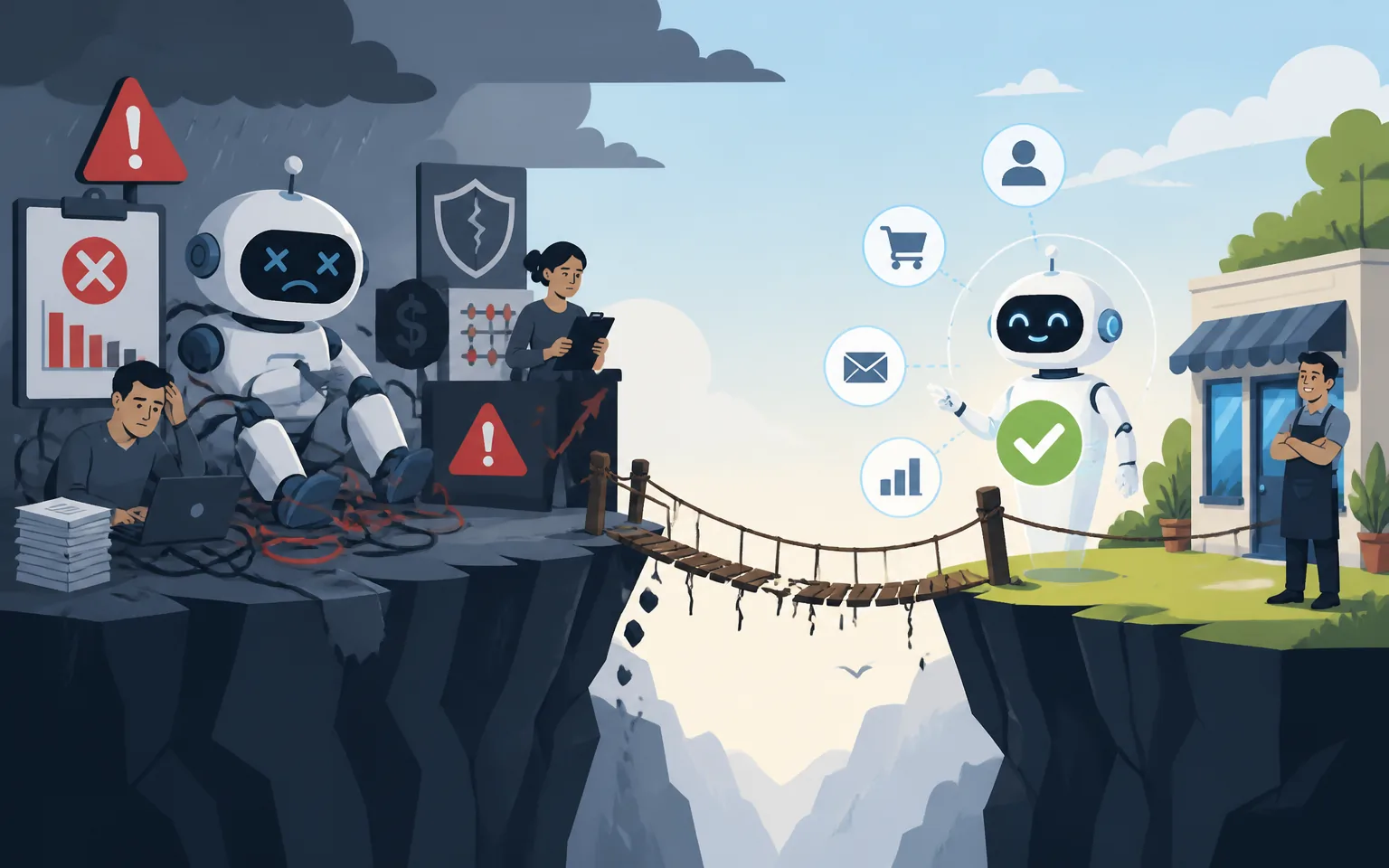
The reality check goes deeper. While 97% of executives say their company deployed AI agents in the past year, only 17% of organizations have genuinely deployed them in production, and just 23% of executives report seeing significant ROI from AI agents specifically. There is a wide canyon between “we tried an agent” and “an agent is reliably making us money.”
One of my favorite cautionary findings from 2026: workers report that AI automation saves them roughly 11 hours a week, yet only 13% say their organization has significantly improved performance because of it. The hours get saved — and then quietly absorbed by the effort of supervising, correcting, and “botsitting” the AI. If you deploy an agent and then spend all your reclaimed time babysitting it, you have not actually gained anything. This is the trap I see small businesses fall into most.
The human side is the other landmine. Small and mid-sized businesses are notably more likely to struggle with adoption challenges — employee resistance, training gaps, and change management — with roughly 51% citing these issues. The technology rarely fails on its own; it fails because nobody owned the rollout. I touched on this tension in my honest look at the disadvantages of AI in business, and it remains the most underrated risk in 2026.
A Practical 5-Step Plan to Deploy Your First Agent
Here is the approach I recommend to keep you on the profitable side of that 40% statistic. It is deliberately unsexy, because boring and reliable beats flashy and abandoned.
Step 1: Pick One Painful, Repetitive, High-Volume Task
Do not start with your hardest problem. Start with the task that is both repetitive and frequent — support ticket triage, lead intake, or appointment booking. Agents shine on predictable, high-volume work, and that is also where you can measure results cleanly. Most teams see measurable cost reductions within the first 30–60 days when they pick the right starting point.
Step 2: Define Success in Numbers Before You Start
Decide your metric up front: tickets deflected, hours saved, leads booked, response time. Because the 30% cost-savings figure typically materializes over three to six months as the AI learns, you need a baseline today so you can prove it later. Without a number, you will never know if it worked, and “it feels faster” does not pay your bills.
Step 3: Keep a Human in the Loop Early
For the first few weeks, have the agent draft and a human approve before anything reaches a customer. AI agents need roughly 6 weeks to be trained on a new product line, versus 12–16 weeks for a human agent — fast, but not instant. The supervised period is where you catch the embarrassing mistakes before they cost you a customer.
Step 4: Start With Off-the-Shelf, Not Custom Builds
The cancelled projects are overwhelmingly the over-engineered ones. Most small businesses do not need a bespoke agent; they need a configured one. With 88% of enterprises already using AI automation in at least one function and the broader AI automation market reaching roughly $169 billion in 2026, the tooling is mature enough that you can rent capability instead of building it. Build custom only after a rented agent has proven the use case pays.
Step 5: Review, Then Expand One Step at a Time
After 60 days, look at your numbers. If the agent hit your target, add an adjacent task. If it did not, fix the workflow or kill it — do not let a failing pilot limp along eating money. Expanding deliberately is how you avoid the cost spiral that kills nearly half of all projects. If you want to think about where this fits in your broader stack, my overview of what AI can do for your business is a good companion read.
Choosing the Right Agent Tools Without Overpaying
Pricing in 2026 ranges widely, from usage-based per-resolution models to flat monthly plans. Given that AI resolves a ticket for $0.50–$2.00 versus $6.00–$13.50 for a human, usage-based pricing is often a bargain for support — but watch the meter on high-volume months. The thing I would caution every small business on: the headline price is rarely the real cost. The real cost includes the time you spend configuring, supervising, and correcting. Factor in the “botsitting” tax, because that 11-hours-saved-but-only-13%-see-results gap is built almost entirely from hidden supervision time.
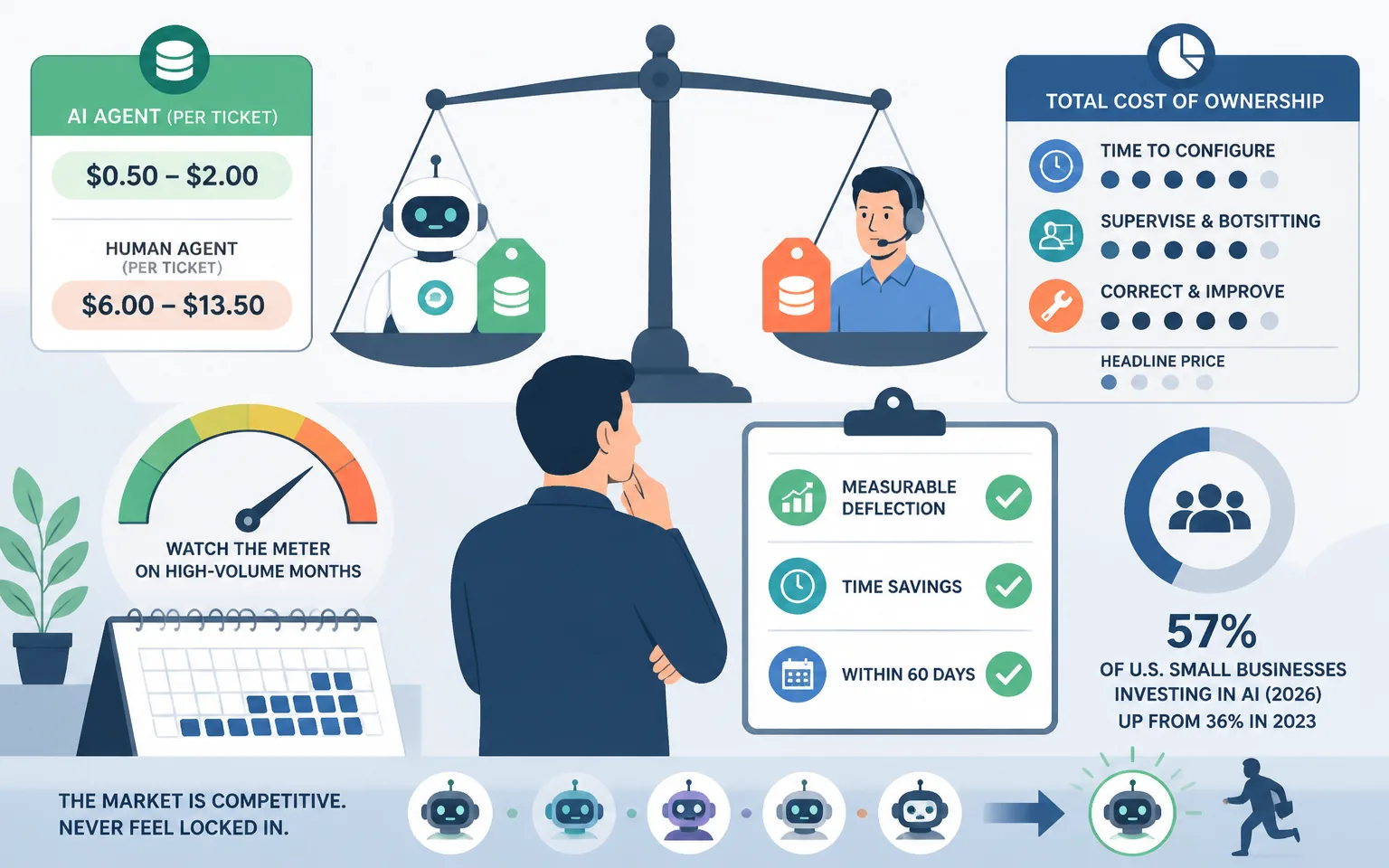
My rule of thumb: if a tool cannot show you measurable deflection or time savings within 60 days on a single use case, it is the wrong tool or the wrong use case. With 57% of U.S. small businesses now investing in AI technology (up from 36% in 2023) and the typical business already using around five AI tools, the market is competitive enough that you should never feel locked in. If one agent underperforms, switch.
FAQ: AI Agents for Small Business
What is the difference between an AI chatbot and an AI agent?
A chatbot responds to messages within a conversation. An AI agent pursues a goal across multiple steps and can take real actions — updating your CRM, sending emails, booking appointments — using connected tools. In short, a chatbot talks; an agent does. By the end of 2026, Gartner expects 40% of enterprise apps to include these task-specific agents, so the distinction is becoming the default.
How much can a small business realistically save with AI agents?
For customer service specifically, small businesses report average annual savings of $12,000 to $48,000, mostly from after-hours coverage and ticket deflection, with an average return of $3.50 for every $1 invested. Time savings run around 5.6 hours per employee per week. Your actual results depend heavily on choosing a high-volume, repetitive task and measuring it from day one.
Are AI agents worth it for a business with only a few employees?
Often yes — small teams benefit disproportionately because an agent covers the nights and weekends you cannot staff. A business handling just 200–500 support queries a month can see meaningful savings within the first quarter. The key is starting with one narrow task rather than trying to automate everything at once.
Why do so many AI agent projects fail?
Gartner attributes the projected 40%+ cancellation rate by 2027 to escalating costs, unclear business value, and weak risk controls. For small businesses, the human side matters too: about 51% struggle with employee resistance and training. Most failures come from over-engineering or skipping clear success metrics, not from the technology being incapable.
How long before an AI agent starts delivering ROI?
Most teams see measurable cost reductions within 30–60 days, while the fuller 30% cost savings typically materializes over three to six months as the agent learns. Businesses that succeed report an average 5.8x ROI within 14 months — but only when they define success up front and expand deliberately.
Final Thoughts
Agentic AI in 2026 is not magic, and it is not a scam. It is a genuinely powerful lever that rewards discipline and punishes hype-chasing. The businesses winning with AI agents are not the ones spending the most or building the flashiest systems — they are the ones who picked one painful task, measured it honestly, kept a human in the loop, and expanded only after the numbers proved out. With 98% of U.S. small businesses already touching AI-enabled tools and the market growing at nearly 45% a year, the question is no longer whether you will use AI agents, but whether you will use them well.
My advice: start small, start measured, and treat every agent like a new hire on probation. Give it one job, watch the results, and promote it only when it earns the role. Do that, and you will land on the profitable side of every statistic in this article. If you found this useful, I would love to hear which task you are automating first — that first choice is the one that matters most.