How to Validate a Business Idea With AI in 2026: My No-Guesswork Framework

The Short Answer: Validate Demand Before You Build Anything
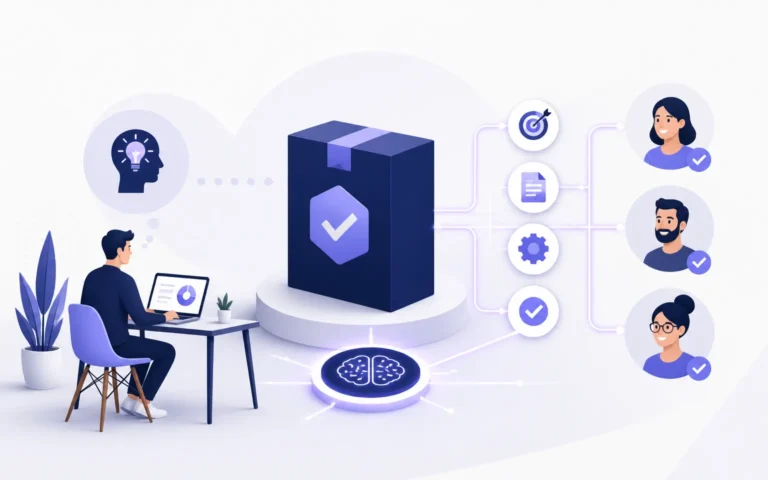
If you want to validate a business idea with AI, the fastest path is to use AI to compress weeks of market research, customer interviews, and competitor analysis into a few focused days — then confirm real demand with actual people before you spend a dollar building. AI does not replace evidence; it helps you gather and interpret evidence faster. That distinction matters, because the single biggest reason startups die is building something nobody wants. Roughly 42% of startup failures trace back to no market need, and along with running out of cash (29%), those two causes account for about 71% of all shutdowns, according to CB Insights analysis of failure post-mortems.
I have launched, killed, and rebuilt enough projects to know that enthusiasm is not evidence. In this guide I will walk you through the exact framework I use to pressure-test an idea with AI as a research partner, and where you must still talk to humans. My goal is simple: help you find out whether an idea is worth your time in days, not after a year of sunk cost.
Why AI Changes the Validation Game
Idea validation used to be slow and expensive. You either paid a research firm or you spent months cold-emailing strangers and reading dense industry reports. AI collapses that timeline. It can summarize a competitor’s entire review corpus, draft a survey, cluster interview transcripts, and estimate a market size before lunch. And small business owners have noticed — 89% of small businesses now use AI in some capacity, up from just 36% in 2023, according to the 2026 U.S. Chamber of Commerce Small Business Survey.
That adoption curve is one of the fastest ever recorded for any technology among small and midsize businesses — faster than smartphones, broadband, or e-commerce, per the same body of 2026 research. The average small business now saves about 5.6 hours per week using AI, with owners and managers saving over 7 hours, according to Salesforce data cited across 2026 industry reports. Validation is exactly the kind of research-heavy, repetitive work where those hours come from.
But here is the trap I want you to avoid: AI is a confidence machine. Ask it whether your idea is good and it will happily cheerlead. So the framework below is built to make AI look for reasons your idea will fail, not reasons it will succeed. Disconfirmation is the whole point.
Step One: Turn Your Idea Into a Testable Hypothesis
Most people describe an idea as a product (“an app that does X”). That is not testable. A hypothesis is: “Freelance bookkeepers who serve 5–20 clients struggle to chase late invoices, currently do it manually in spreadsheets, and would pay $40/month to automate it.” Notice the components — a specific customer, a specific painful job, the current alternative, and a willingness-to-pay guess.
I use AI here as a sparring partner. I paste my rough idea and ask it to rewrite it as three competing hypotheses, each naming a different customer segment. Then I ask it to list the riskiest assumption in each — the one that, if false, sinks the whole thing. This forces clarity fast. Given that only about 8% of businesses have reached advanced AI adoption while most remain in early experimental stages (per 2026 adoption research), simply using AI to sharpen your thinking already puts you ahead of the pack.
If you are building a solo venture, this step is even more important because you cannot afford to chase three directions at once. I wrote more about that constraint in my guide on starting a one-person business with AI, and the same discipline applies: pick the riskiest assumption and go test it first.
Step Two: Use AI for Fast, Honest Market Research
Once you have a hypothesis, you need to know if the market is real and how crowded it is. This is where AI earns its keep. I run three research passes.
Sizing the Market
I ask AI to estimate the total addressable market using a bottom-up method — number of potential customers multiplied by realistic annual spend — and to show its assumptions so I can challenge them. Bottom-up beats top-down because it forces concrete numbers. A market that looks huge on paper often shrinks when you count only the people with your specific pain.
Mapping Competitors
A good validation process analyzes 5–10 direct and indirect competitors, according to 2026 customer-discovery guidance. I have AI pull each competitor’s positioning, pricing tier, and — most valuable — the recurring complaints in their public reviews. Those complaints are gold; they are pre-validated pain points your competitors are failing to solve. Marketing and customer engagement is where most owners point AI first, with 77% of SMBs putting it at the top of their use-case list, so competitors are almost certainly using AI on their marketing but not necessarily fixing their product gaps.
Spotting the Trend Line
I ask AI to summarize where the category is heading over the next two to three years and what could make my idea obsolete. Timing kills more ideas than quality does. If the trend is against you, better to learn it now. For a broader view of what these tools can realistically do for an early venture, I keep coming back to my breakdown of what AI can actually do for your business.
Step Three: Talk to Real Humans (AI Cannot Do This For You)
This is the step people skip, and it is the most important one. No amount of AI research replaces a conversation with someone who has your problem. The data backs this up: you typically need six to 12 interviews per homogeneous customer segment to reach thematic saturation — the point where you stop hearing new patterns — according to 2026 customer-discovery research. Many founders aim for 15–20 interviews with target users to feel confident.
Here is the rule that makes interviews useful: ask about the past, not the future. “What are you doing today to solve this?” surfaces actual pain. “Would you use this?” surfaces politeness. That single reframing, emphasized across 2026 validation guidance, separates real signal from flattery. People will tell you your idea is great because they like you; they will not fake the workaround they built last Tuesday.
AI still helps around the edges. I have it draft my interview guide before I start, generate follow-up probes, and — after the calls — transcribe and cluster the recordings into themes. The best teams treat that research repository as a living asset rather than a folder of forgotten PDFs, according to 2026 discovery-tooling research. What AI must not do is run the conversation for you or decide what the answers mean.
Step Four: Design Against Your Own Confirmation Bias
Confirmation bias is the most persistent threat to honest validation, because founders unconsciously filter feedback to support what they already believe — testing with friends instead of target customers and reading ambiguous results as green lights, according to 2026 MVP-validation research. I have done this myself, and it is expensive.
The fix is structural, not willpower. I write the interview guide before any session so I cannot steer questions toward the answer I want. When possible I have a less-invested person run some interviews. And I frame the goal as invalidation: I am trying to prove the idea wrong, and it only survives if it refuses to die. AI is genuinely useful here — I paste my notes and explicitly ask it to argue the bear case, list every reason a reasonable customer would say no, and flag where I am reading too much into weak signals.
Step Five: Test Willingness to Pay Before You Build
Interest is cheap. Money is signal. The willingness-to-pay guess in your hypothesis has to be tested, and the cleanest way is to ask people to commit something — a pre-order, a deposit, a paid pilot, or at minimum an email plus a credit-card-gated waitlist. A “yes, that sounds useful” costs nothing; a $20 deposit costs something, and that is exactly why it means something.
You can validate pricing through direct discussion in interviews, documenting three to five core pain points with frequency and severity ratings so you know which problem is worth paying to remove, per 2026 validation frameworks. AI helps you model pricing tiers and draft the landing page copy for a smoke test, but the number that matters is how many strangers actually pull out a card. The payoff for getting this right is real: 91% of small businesses using AI report revenue increases, according to Salesforce research — but only after they have built something people will pay for.
Step Six: Build the Smallest Possible Test
Only after demand and willingness-to-pay show signal do I build anything — and even then, the smallest thing possible. A landing page, a concierge service done manually behind the scenes, or a single-feature MVP. Customer discovery in 2026 is no longer a one-off pre-launch phase; it is a continuous loop that keeps running after launch, according to 2026 discovery research. Your first build is just the next experiment, not the finish line.
This matters because tech-flavored ventures fail faster than average — about 63% of tech startups close within five years, against an all-industry rate closer to 49% over the same window, per U.S. Bureau of Labor Statistics data. The teams that survive are the ones who keep testing cheaply instead of betting everything on a big launch. If your validated idea points toward something you can package and sell online, my walkthrough on creating and selling digital products covers how to turn that first test into revenue.
The Tools I Reach For
You do not need a big stack. A general AI assistant handles hypothesis-shaping, market summaries, competitor synthesis, and transcript analysis. A simple form tool runs your survey. A landing-page builder runs your smoke test. Dedicated discovery platforms exist for running and analyzing interviews at volume, and lightweight tools let you tag transcripts and cluster themes across studies, per 2026 tooling research — but do not let tool-shopping become procrastination. Accounting-style AI adoption is already growing fastest among businesses with 5 to 20 employees, with 24% of AI-using small businesses relying on tools like AI-powered bookkeeping, according to 2026 data — a reminder that the winners pick a few tools and go, rather than assembling the perfect stack.
A Realistic Timeline
Here is how a focused validation sprint looks in practice. Days one and two: shape the hypothesis and run AI market research. Days three through seven: recruit and run six to 12 interviews per segment. Day eight: cluster findings with AI and write the bear case. Days nine and ten: launch a smoke test and measure willingness to pay. Inside two weeks you will know more than most founders learn in six months — and you will have spent almost nothing to learn it.
Frequently Asked Questions
Can AI fully validate my business idea on its own?
No. AI accelerates research, drafts your interview questions, and analyzes results, but validation ultimately depends on real customer behavior — interviews, pre-orders, and paid tests. AI gathers and interprets evidence faster; it cannot manufacture demand or replace a genuine conversation with someone who has the problem.
How many customer interviews do I actually need?
Aim for six to 12 interviews per homogeneous segment to reach the point where you stop hearing new patterns, according to 2026 discovery research. Many founders do 15–20 to feel confident. Fewer is fine if a focused problem space shows clear, repeating pain early.
What is the biggest mistake people make when validating?
Confirmation bias — asking friends instead of target customers and treating polite interest as proof. Since no market need causes about 42% of startup failures, per CB Insights, the fix is to actively try to disprove your idea and only proceed if it survives.
How do I test if people will pay without building the product?
Use a smoke test: a landing page with a real call to action, a pre-order, a deposit, or a card-gated waitlist. A commitment that costs the customer something — even a small deposit — is far stronger signal than a verbal “I’d use that.”
How long should validation take?
With AI compressing the research, a focused sprint runs about two weeks: a few days of hypothesis and market work, a week of interviews, and a few days for a paid smoke test. The point is to reach a go/no-go decision fast and cheap.
Final Word
Validation is not about proving you are right. It is about finding out you are wrong while it is still cheap to change course. AI makes that process dramatically faster — it can research, draft, transcribe, and synthesize in hours — but it will also flatter you if you let it. Point it at the bear case, insist on talking to real people, and make strangers commit money before you build. Do that, and you will avoid the number-one killer of new ventures and give yourself a real shot at being in the minority that lasts. Start with one hypothesis and one risky assumption today; you can know whether it holds by the end of next week.