GEO & AEO: Optimize Content for AI Search

GEO and AEO are the two skills that now decide whether your content shows up in AI search at all. For more than a decade, my SEO advice boiled down to one goal: rank on Google’s first page and earn the click.
For the official picture of how answers surface in results, see Google’s documentation on AI features in Search; the broader discipline is now widely referred to as generative engine optimization.
In 2026, that goal is only half the battle. A huge share of searchers never reach a list of blue links anymore.
They ask ChatGPT, scan a Google AI Overview, or let Perplexity hand them a synthesized answer with a few citations. If your content is not part of that answer, you are invisible to them — no matter how well you rank.
This is the shift I want to walk you through: Generative Engine Optimization (GEO) and Answer Engine Optimization (AEO). These are not buzzwords replacing SEO; they are the natural next chapter of it.
If you already understand how to rank higher on Google, you have a strong foundation. Now I will show you how to make your content the thing AI engines quote, cite, and recommend.
Key Takeaways on GEO and AEO
- GEO and AEO build on SEO — they do not replace it. The same authority and relevance signals still apply.
- ChatGPT serves over 800 million weekly active users and processes ~2.5 billion prompts daily, roughly 65% of which behave like searches.
- Google AI Overviews appear on as many as 60% of search results pages and cut click-through rates by 58% (Ahrefs).
- Freshness is the strongest lever: content updated within 30 days earns roughly 3.2× more AI citations than stale content.
- Front-load a direct, quotable answer under each heading — AI engines extract answers, they do not read your warm-up.
- Add a concrete, sourced statistic every 150 to 200 words; AI engines preferentially cite content backed by hard data.
- Implement FAQPage and Article schema so language models can reliably parse your pages.
What GEO and AEO Actually Mean (and How They Differ from SEO)
Let me clear up the alphabet soup first, because the terms get used loosely and that causes confusion.

SEO (Search Engine Optimization) is what you already know. You optimize pages so they rank in traditional search results and earn clicks from human searchers.
AEO (Answer Engine Optimization) focuses on getting your content pulled into AI-powered answer features like Google’s AI Overviews, answer snippets, and voice responses. The goal is to be the source summarized at the top of the page.
GEO (Generative Engine Optimization) goes a step further. It is about getting cited directly inside responses from large language models such as ChatGPT, Claude, Gemini, and Perplexity.
When someone asks an AI “what are the best email marketing tools,” GEO is what determines whether your article gets named. That single citation is the new equivalent of a first-page ranking.
Here is the reassuring part: GEO and AEO do not replace SEO — they build on it. Generative engines lean on many of the same authority and relevance signals that traditional search algorithms already use.
The work you put into quality content, site structure, and credibility still pays off. You are simply optimizing for a wider set of destinations now.
Why This Matters More Than Any SEO Trend Before It
I do not say that lightly. I have watched a lot of “next big thing” claims come and go in this industry.
But the numbers behind AI search are not hype — they reflect a structural change in how people find information. Consider the scale.
ChatGPT now serves over 800 million weekly active users and processes around 2.5 billion prompts every day, roughly 65% of which behave like searches. Perplexity handles in the neighborhood of 780 million queries a month.
And Google’s AI Overviews now appear on as many as 60% of search results pages. Your audience is already living inside these tools.
Now the part that should make every blogger pay attention. Ahrefs found that AI Overviews cut click-through rates for top-ranking Google content by 58%, a steep jump from the prior year.
By some estimates, zero-click experiences capture around 68% of traffic — the answer is delivered without the user ever visiting a website. Ranking number one and still losing the click is the new reality.
So the question is no longer only “how do I rank?” It is “how do I become the source the AI trusts and cites?”
Being cited inside an AI answer is the new first page. This is the same evolution I covered in my piece on how AI is changing SEO strategies, only now it has moved from prediction to daily reality.
How Each AI Engine Decides What to Cite
One mistake I see people make is treating “AI search” as a single monolith. It is not. Each engine has its own personality and preferences, and tailoring to them gives you an edge.
ChatGPT favors authoritative, long-form content. It frequently lifts structured formats, bullet points, and FAQ-style answers almost verbatim, so a clean, well-organized passage gets reused.
Perplexity always shows citations and prioritizes fresh, well-sourced articles. Original data and authoritative references win here, so a current post backed by real numbers is a strong candidate.
Google AI Overviews overwhelmingly pull from content that already ranks in the top 10 organic positions. This is why classic SEO still matters enormously; FAQ and HowTo schema and crisp definitions improve your odds.
Bing Copilot synthesizes from high-quality results and leans toward step-by-step guides and comparison content. Claude rewards longer, coherent passages with clear explanations and supporting evidence over choppy, keyword-stuffed text.
Notice the common thread: structure, freshness, authority, and evidence. Optimize for those four and you are speaking every engine’s language at once.
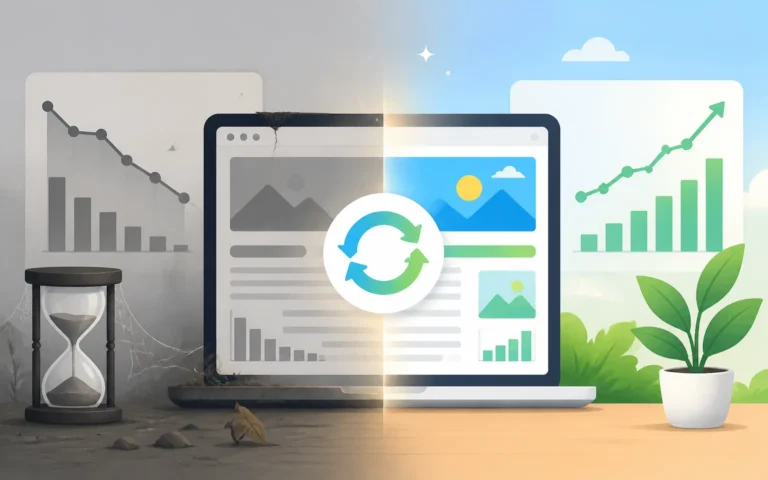
The Freshness Factor: Why Stale Content Disappears
If you take one tactical lesson from this article, make it this one. AI engines have a strong bias toward recently updated content, and the data is striking.

Content updated within the last 30 days receives roughly 3.2 times more AI citations than stale content. In AEO research on commercial queries, 83% of AI citations came from pages updated within the past 12 months.
More than 60% came from pages refreshed within the last six months. In other words, freshness is not a nice-to-have — it is one of the strongest levers you can pull.
This changes how I think about a content library. It is no longer “publish and forget”; it is “publish and maintain.”
A consistent publishing rhythm plus regular refreshes of your best posts signals that your site is a living, trustworthy source. My guide on effective marketing through blogs pairs well with this mindset.
A Practical GEO and AEO Playbook You Can Start Today
Theory is fine, but you came here for actions. Here is the exact framework I recommend, in the order I would tackle it.
1. Front-Load the Answer
AI engines extract answers; they do not read your warm-up. Within the first one or two sentences under a heading, give a direct, quotable answer to the question that heading poses.
Then expand with context, nuance, and examples. If a machine can lift your opening line and have it stand on its own as a correct answer, you have done it right.
2. Structure for Extraction
Use clear headings phrased as real questions people ask. Break complex ideas into bullet points and numbered steps.
Add an FAQ section near the end that answers natural follow-up questions. ChatGPT and Google’s AI features love this format because it maps directly onto how they assemble answers.
3. Add Hard Data Every Few Paragraphs
This one is underrated. A good rule of thumb is to include a specific statistic, percentage, or concrete data point with a source roughly every 150 to 200 words.
AI engines preferentially cite content with hard data because numbers add credibility to their generated responses. Vague, opinion-only content gets passed over in favor of pages that bring receipts.
4. Implement Structured Data (Schema)
This is the technical step people skip, and it costs them dearly. Add FAQPage, Article, and where relevant Product schema across your site.
Schema is how machines reliably parse what your content means. Without it, language models struggle to interpret your pages, and your content can lose a large share of its synthesis priority.
Validate your markup with Google’s Rich Results Test before moving on.
5. Strengthen Authority and Earn Citations
Authority signals still rule. Build credibility through accurate, expert content, clear authorship, and citations from credible third-party sites.
When other trustworthy sources reference you, AI engines treat you as more reliable. This is the same authority work that powers traditional rankings, which is why solid on-page SEO remains the bedrock beneath all of this.
6. Keep It Fresh on a Schedule
Revisit your highest-value posts on a recurring cadence. Update statistics, add new sections, refresh examples, and re-publish.
Given that freshness can multiply your citations several times over, a maintenance calendar is one of the highest-ROI habits you can build.
How to Measure Whether GEO Is Working
Old metrics only tell part of the story now. Clicks and rankings still matter, but you also need visibility into the zero-click world.
Start tracking whether your brand and pages get mentioned in AI responses. Periodically query ChatGPT, Perplexity, and Google AI Mode with the questions your audience asks, and watch for citations and brand mentions, not just position.
A growing class of “AI visibility” tools now monitors how often LLMs reference your domain, and even manual spot-checks each month reveal trends. The goal is to know, in plain terms, whether the machines consider you a source worth quoting.
I keep a simple monthly log: the ten questions my readers care about most, and which engines name byskh.com in the answer. When a question stops citing me, that post goes to the top of my refresh queue.
This turns GEO from a vague aspiration into a measurable feedback loop. You are no longer guessing whether your work lands — you are watching the citations move and responding to them.
Where SEO Goes From Here
I want to end on a note of optimism, because it is easy to read all this and feel like the ground is shifting under you. It is shifting — but in a direction that rewards people already doing good work.

GEO and AEO favor exactly what great content creators have always cared about: clarity, accuracy, structure, evidence, and trust. The spammy shortcuts that gamed old algorithms do not survive in an AI-mediated world.
Language models synthesize for a human who wants a genuinely useful answer. If you commit to being the most helpful, best-structured, most current source on your topics, you are building the exact asset that wins in 2026 and beyond.
Summary
GEO and AEO are how you stay visible as search shifts from blue links to AI-generated answers. GEO gets you cited inside tools like ChatGPT and Perplexity; AEO gets you pulled into Google AI Overviews and answer snippets.
Both build on solid SEO rather than replacing it, and both reward the same four traits: structure, freshness, authority, and evidence. The biggest single lever is freshness — recently updated pages earn up to 3.2× more AI citations.
Start small: take your five best posts, front-load their answers, add schema, sprinkle in current data, and refresh the dates. Then make maintenance a habit, because the sites treated as living knowledge bases are the ones AI engines keep recommending.
Frequently Asked Questions
Is GEO replacing SEO?
No. GEO and AEO build on SEO and rely on many of the same authority and relevance signals. Strong traditional SEO is the foundation that makes AI citation possible, especially for Google AI Overviews, which mostly cite top-10 ranking pages.
What is the single most impactful GEO tactic?
Freshness. Content updated within 30 days earns roughly 3.2 times more AI citations than stale content, and the large majority of AI citations come from pages updated within the past year.
Do I need schema markup for AI search?
Yes. Structured data like FAQPage and Article schema helps language models parse your content accurately. Pages without it can lose a significant share of their synthesis priority.
How do I get cited by ChatGPT specifically?
Publish authoritative, long-form content with clear structure, bullet points, and FAQ sections. ChatGPT often reuses well-organized passages almost verbatim, so clean formatting and direct answers give you the best shot.
Related reading: Programmatic SEO With AI: Scale Content Safely.
Related reading: Schema Markup for SEO in 2026: How I Use Structured Data.
Related reading: How to Refresh Old Blog Posts in 2026: My Content-Refresh System for More Traffic.