How to Use ChatGPT for Marketing: 12 Practical Use Cases

ChatGPT has fundamentally changed how marketers work. What once required hours of brainstorming, drafting, and editing can now be accomplished in minutes with the right prompts. But most marketers are barely scratching the surface of what ChatGPT can do for their campaigns, content, and strategy.
This is not about replacing your marketing team with AI. It is about giving every marketer on your team a tireless assistant that can draft, brainstorm, analyze, and iterate at speeds that were previously impossible. The marketers who master ChatGPT prompting are producing more content, running better campaigns, and making smarter decisions than their competitors.
In this guide, you will find 12 practical ChatGPT use cases that you can implement today, complete with copy-paste prompts and real-world examples. Whether you are a solo entrepreneur or part of a marketing team, these workflows will save you hours every week.
Why Marketers Are Adopting ChatGPT in 2026
The adoption numbers speak for themselves. According to recent industry surveys, 85% of marketers now use AI tools for content creation, and ChatGPT leads the pack as the most widely used tool. But adoption alone does not tell the whole story. The real question is why marketers who use ChatGPT are outperforming those who do not.
The primary driver is speed. A marketing manager who previously spent three hours drafting a blog post outline, email sequence, and social media calendar can now accomplish all three in under 30 minutes. That is not a marginal improvement. That is a fundamental shift in productivity.
The second driver is consistency. ChatGPT helps maintain brand voice across dozens of content pieces, ensuring that your messaging stays on point whether you are writing your first email of the day or your twentieth social media post.
The third driver is ideation. Every marketer has experienced creative blocks. ChatGPT eliminates them. Need 20 blog post ideas in your niche? Ten subject line variations for your next campaign? Five angles for a product launch? ChatGPT generates options in seconds, freeing your creative energy for strategy and refinement.
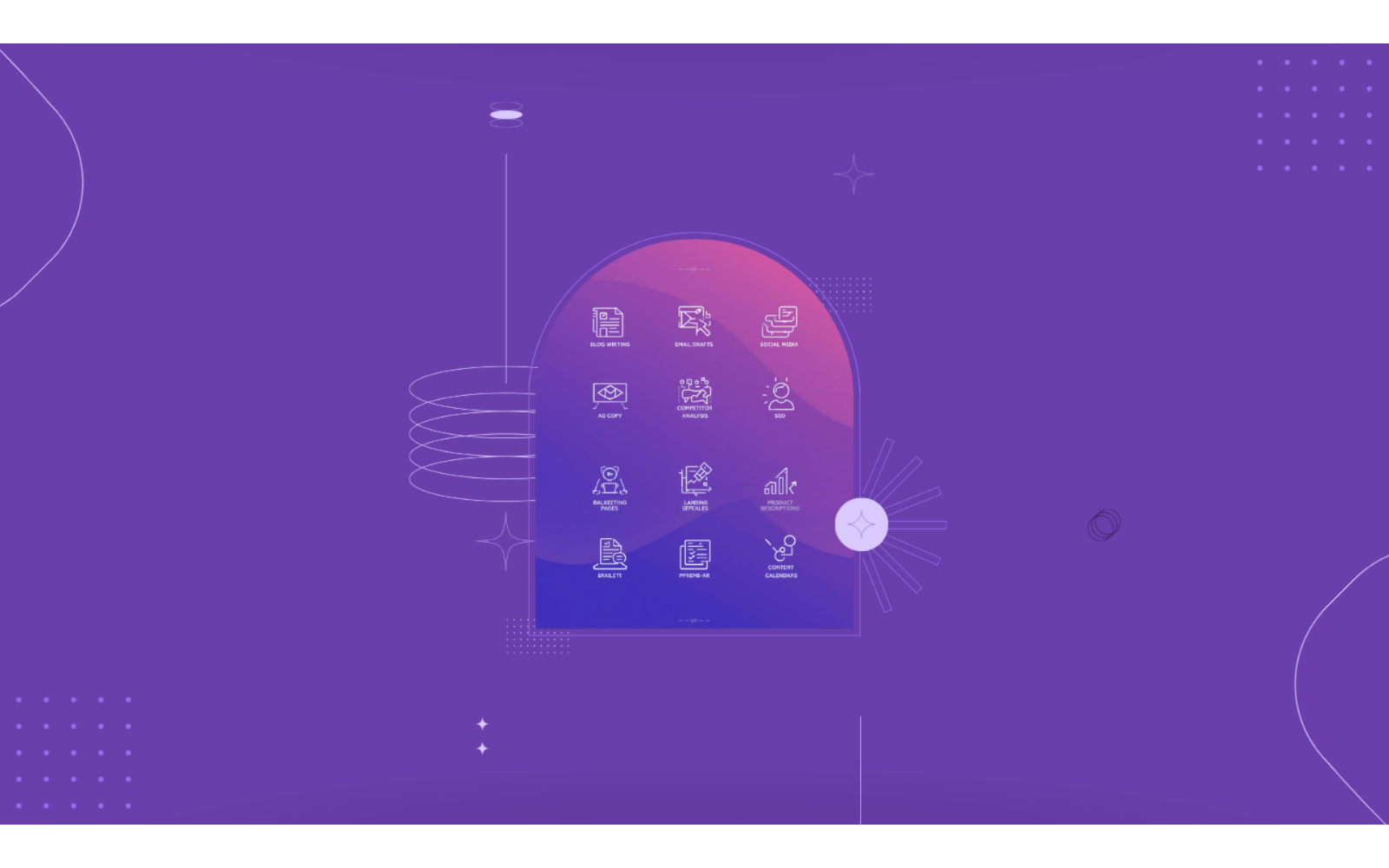
12 ChatGPT Marketing Use Cases
1. Blog Post Ideation and Outlining
ChatGPT excels at generating blog post ideas tailored to your niche and audience. Provide ChatGPT with your target audience, industry, and content goals, and it will generate dozens of relevant topic ideas complete with working titles and outline structures.
Example prompt: “I run a small business marketing blog targeting entrepreneurs. Generate 10 blog post ideas about AI marketing that would appeal to non-technical business owners. For each idea, include a working title, target keyword, and a brief 5-point outline.”
2. Email Campaign Drafting
Writing email campaigns is one of ChatGPT’s strongest marketing applications. It can draft welcome sequences, promotional emails, newsletters, and re-engagement campaigns that follow proven copywriting frameworks like AIDA, PAS, and BAB.
Example prompt: “Write a 5-email welcome sequence for new subscribers to my digital marketing newsletter. Each email should be 200 to 300 words, use a conversational tone, and include a clear call to action.”
3. Social Media Captions at Scale
Creating platform-specific social media content is time-consuming. ChatGPT can generate captions tailored to each platform’s unique requirements, including character limits, hashtag conventions, and engagement patterns.
Example prompt: “Transform this blog post summary into 5 unique social media posts: one for LinkedIn (professional, 150 words), one for Twitter/X (under 280 characters with a hook), one for Instagram (engaging with emoji suggestions and 10 hashtags), one for Facebook (conversational, 100 words), and one for Pinterest (descriptive, keyword-rich).”
4. Ad Copy Variations
Testing multiple ad copy variations is essential for campaign optimization. ChatGPT can generate variations quickly, allowing you to test more aggressively and find winning copy faster.
5. Customer Persona Development
Building detailed customer personas traditionally requires extensive research. ChatGPT can help you develop comprehensive personas based on your existing customer data and market knowledge.
6. Competitive Analysis Summaries
Understanding your competitive landscape is crucial. ChatGPT can help you structure your analysis and identify key differentiators by analyzing competitor messaging and positioning.
7. SEO Meta Descriptions
Writing compelling meta descriptions that include target keywords while staying under 160 characters is a skill that ChatGPT has mastered. It can generate multiple variations for each page.
8. Landing Page Copy
High-converting landing page copy follows specific structures. ChatGPT can draft landing pages that include headlines, subheadlines, benefit bullets, social proof sections, and calls to action.
9. Survey and Feedback Analysis
Customer feedback data is invaluable. ChatGPT can analyze qualitative feedback, identify themes, and summarize key findings in actionable reports.
10. Product Descriptions
E-commerce businesses need unique, compelling product descriptions for every item. ChatGPT generates descriptions that highlight benefits and include relevant keywords for SEO.
11. PR and Press Release Drafts
Press releases follow a strict format that ChatGPT handles exceptionally well. It can draft releases that include all standard elements: headline, dateline, lead paragraph, body, quotes, and boilerplate.
12. Content Calendar Planning
Planning a month of content across multiple channels requires strategic thinking. ChatGPT can generate comprehensive content calendars that align with your marketing goals, seasonal trends, and audience preferences.
Prompting Best Practices for Marketers
The quality of ChatGPT’s output is directly proportional to the quality of your input. Here are the prompting techniques that consistently produce the best marketing content.
Be specific about your audience. Instead of asking ChatGPT to “write a blog post about email marketing,” say “write a blog post about email marketing for e-commerce store owners who are new to email marketing and have budgets under $100 per month.”
Define the format and structure. Tell ChatGPT exactly what you want the output to look like. Specify word count, tone of voice, formatting preferences, and structural elements.
Use role-based prompting. Start your prompts with “You are a [specific role]” to frame ChatGPT’s perspective. This shapes the language, depth, and approach of the output.
Iterate and refine. Your first prompt rarely produces perfect output. Use follow-up prompts to refine: “Make the tone more conversational,” “Add more specific data points,” or “Shorten each section by 30%.”
Provide examples. When you want ChatGPT to match a specific style, paste an example of content you like and say “Write in a similar style to this example.”
Limitations and When to Use Human Review
Factual accuracy requires verification. ChatGPT can generate plausible-sounding statistics that are entirely fabricated. Always fact-check any data points before publishing.
Brand voice needs human calibration. While ChatGPT can approximate your brand voice, it requires human oversight to ensure consistency.
Strategic thinking remains human territory. ChatGPT can execute tactical marketing tasks brilliantly, but it should not replace strategic decision-making.
Originality requires your input. ChatGPT generates content based on patterns, which means it tends toward generic outputs. Your unique insights and experiences are what differentiate your content.
Recommended ChatGPT Plugins for Marketing
WebPilot allows ChatGPT to browse the web in real time for current research. Canva integrates design capabilities directly into ChatGPT. Zapier connects ChatGPT to thousands of marketing tools for automated workflows. SEO Core AI provides keyword research and SEO optimization within ChatGPT.
Summary
ChatGPT is the most versatile marketing tool available in 2026, capable of handling everything from ideation to execution across every marketing channel. The 12 use cases covered in this guide represent the highest-impact applications, but they are just the beginning. The key is to approach ChatGPT as a collaborative partner, not a replacement for marketing expertise.
Key Takeaways
- ChatGPT can handle 12 core marketing tasks, from blog ideation to content calendar planning, saving marketers 10 or more hours per week.
- The quality of output depends entirely on prompt quality. Use specific audience context, defined formats, and role-based prompting.
- Always fact-check AI-generated content and add your unique expertise before publishing.
- Use ChatGPT for tactical execution while keeping strategic decisions with your human team.
- Start with 2 to 3 use cases, master them, then expand to more advanced applications.
Frequently Asked Questions
Is ChatGPT free for marketing use?
ChatGPT offers a free tier sufficient for many marketing tasks. The Plus plan at $20 per month provides access to GPT-4 with improved quality and faster responses. Most marketers find the paid plan worthwhile.
Can ChatGPT write in my brand voice?
Yes, but it requires training. Share examples of your existing content and brand guidelines with ChatGPT at the start of each session. Over time, develop a master prompt that captures your brand voice.
Will Google penalize AI-generated content?
Google evaluates content based on quality and helpfulness, not whether it was created by AI or humans. Content that demonstrates expertise and provides value can rank well regardless of how it was produced.
How do I measure the ROI of using ChatGPT for marketing?
Track time saved per week, content output volume before and after adoption, and engagement metrics on AI-assisted content. Most marketers report saving 8 to 15 hours per week.
Can ChatGPT replace a copywriter?
ChatGPT augments copywriters rather than replacing them. It handles first drafts and repetitive tasks, freeing copywriters for high-value creative work and strategy.
Related Articles: