AI Conversion Rate Optimization: How I Turn More Visitors Into Subscribers and Sales

A few years ago, I treated conversion rate optimization like a guessing game with extra steps. I would change a button color, wait three weeks for an A/B test to “reach significance,” shrug at the inconclusive result, and move on. Today, my CRO process looks completely different — and the difference is AI. In this guide, I want to walk you through exactly how I use AI conversion rate optimization across my landing pages, email funnels, and affiliate offers, which tools actually earn their subscription fee, and where I still refuse to let the machines take the wheel.
If you run a blog, an email list, or an affiliate business like I do, this matters more than almost anything else you could work on. Traffic is getting more expensive and harder to earn. Squeezing more subscribers and sales out of the visitors you already have is the highest-leverage move available — and AI has made it accessible to solo operators, not just enterprise teams with data scientists on staff.
What AI Conversion Rate Optimization Actually Means
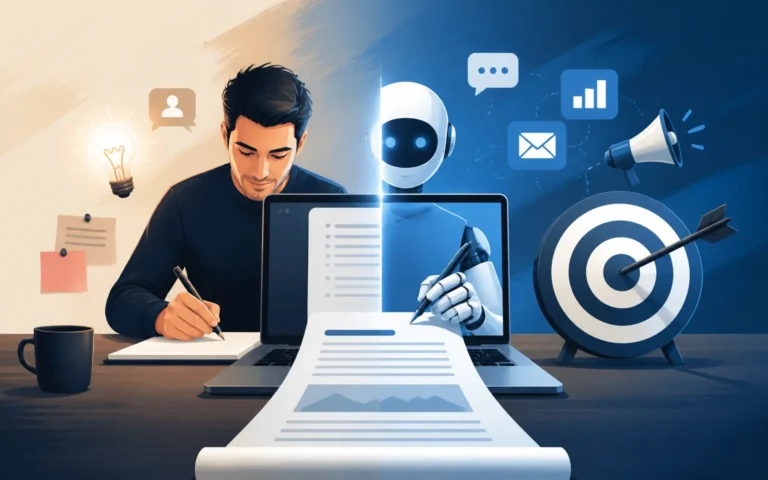
Let’s define the term before we go further, because “AI CRO” gets thrown around loosely. Traditional CRO is the practice of systematically improving the percentage of visitors who take a desired action — subscribing, clicking an affiliate link, buying a product. AI conversion rate optimization applies machine learning and generative AI to that same practice in four ways: analyzing visitor behavior at a scale no human can match, generating test variations in seconds instead of days, personalizing what each visitor sees in real time, and predicting which changes will move the needle before you even run the test.
The adoption numbers tell you how fast this shift is happening. According to the Salesforce State of Marketing 2026 report, 87% of marketers now use generative AI in at least one workflow, up from 51% in 2024. But here’s the gap I find fascinating: Supermetrics’ 2026 Marketing Data Report found that only 6% of marketing organizations have fully embedded AI across their workflows. Almost everyone is dabbling; almost no one is systematic. That gap is your opportunity.
Why I Moved My CRO Process to AI
My old testing process had two fatal problems: sample size and speed. As a niche site owner, I don’t get Amazon-level traffic. A classic A/B test on a page getting 2,000 visits a month can take months to produce a trustworthy answer, and by then the seasonal context has changed. AI-assisted testing tools address this with predictive models that identify likely winners faster. Google has reported that AI-powered testing can reduce optimization time by up to 60% compared to traditional A/B testing cycles — and that matches my experience almost exactly.
The second reason is personalization. A static page shows the same headline to a first-time visitor from Pinterest and a returning reader who has opened twelve of my emails. That’s a wasted opportunity. Research compiled by Landingi in 2026 found that sites employing AI personalization see average conversion lifts of around 22% along with a 15% reduction in bounce rates. McKinsey’s long-running personalization research points the same direction, estimating that effective personalization can boost revenue by 5–15% and marketing ROI by 10–30%. Those aren’t rounding errors; for a small business, that’s the difference between a hobby and an income.
My Five-Part AI CRO System
1. Let AI Find the Leaks Before You Fix Anything
Most people start CRO by redesigning something. I start by asking AI where the problem actually is. I export my analytics data — landing page performance, scroll depth, exit pages, funnel drop-off — and feed it to an AI assistant with a simple prompt: “Here is my funnel data. Where am I losing the most potential subscribers, and what are three hypotheses for why?” The model spots patterns I miss: a page where mobile visitors bounce at twice the desktop rate, a signup form that dies on step two, an affiliate review where readers exit right before the comparison table.
AI-powered heatmap and session-analysis tools take this further. Instead of manually watching hundreds of session recordings, tools with AI summaries cluster visitor behavior and flag friction points automatically. One afternoon of AI-assisted diagnosis now replaces what used to be a week of squinting at heatmaps.
2. Generate Variations at Machine Speed, Filter With Human Judgment
Once I have a hypothesis, I use generative AI to produce test variations — headlines, CTA copy, form microcopy, social proof placement. Where I used to write three headline options, I now generate thirty and shortlist five. The volume matters because your first ideas are usually your most generic ones.
The payoff on CTAs alone is remarkable. One 2026 industry analysis from Envive found that AI-generated dynamic CTAs outperform static CTAs by as much as 247%, largely because they adapt wording to visitor context instead of showing everyone the same “Sign Up Now.” Even without dynamic insertion, testing AI-generated CTA copy against my old defaults has produced double-digit lifts on several pages. If you want the foundation for this on the email side, my guide to AI email subject lines covers the same generate-then-filter workflow applied to inbox copy.
3. Personalize the Page to the Visitor
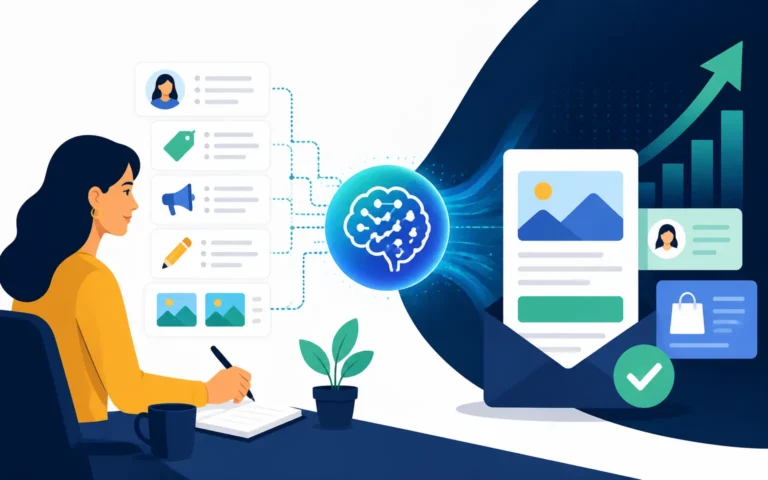
This is where AI CRO stops being “faster testing” and becomes something genuinely new. Modern AI landing page tools can swap headlines, offers, and testimonials based on traffic source, device, geography, or past behavior. A visitor arriving from my email list sees a different pitch than a cold visitor from search — automatically.
The commercial logic is proven at the highest level: McKinsey has estimated that Amazon’s recommendation engine drives roughly 35% of its sales. You and I don’t have Amazon’s data, but the same principle scales down. Brands using AI-driven funnel personalization have pushed average conversion rates to 6.8%, with top performers exceeding 14%, according to 2026 benchmarks compiled by DesignRush. On my own site, simply matching the landing page headline to the ad or pin that brought the visitor — which AI tools now do automatically — was worth a meaningful lift within a month. I walk through my favorite tools for this in my roundup of the best AI landing page builders.
4. Optimize the Email Capture and Nurture Loop
Conversion doesn’t end at the click — for most of us, the email list is the real conversion. I use AI in three places here. First, predictive send-time and subject-line optimization to get more opens. Second, AI-scored lead magnets: I test which magnet converts best for which traffic segment rather than offering one universal freebie. Third, AI-personalized email content that adapts based on what a subscriber clicked previously — a topic I covered in depth in my post on AI email personalization.
It’s worth noting that testing remains the backbone of measurement even in the AI era: the Supermetrics 2026 report found that 69% of marketers still rely on A/B testing as their primary measurement method. AI doesn’t replace the test; it makes the test smarter, faster, and cheaper to run.
5. Close the Loop on Affiliate and Sales Pages
For affiliate content specifically, AI CRO means optimizing the elements that drive clicks to merchant pages: comparison tables, button placement, scarcity framing, and FAQ schema. I use AI to analyze which sections of my top review posts get engagement before the affiliate click, then restructure underperforming posts to match that pattern. The compounding effect across a portfolio of posts is substantial — a 15% click-through improvement on twenty review posts is a raise you give yourself.
The Tools I Actually Use and Recommend
You don’t need a dozen subscriptions. My working stack is: a general-purpose AI assistant (Claude or ChatGPT) for analysis and copy generation; an AI-capable landing page builder for dynamic pages and fast test deployment; an email platform with built-in predictive features for send-time and subject-line optimization; and an AI-summarizing analytics or heatmap tool for diagnosis. That’s four line items, and most solo operators can cover all of them for under $150 a month. Start with the assistant and the landing page tool — they deliver the fastest visible wins.
Where AI CRO Goes Wrong
I’d be lying if I told you this was all upside. There are three failure modes I see constantly. First, blind trust in AI recommendations: models hallucinate plausible-sounding explanations for data patterns, so every hypothesis still needs a real test behind it. Second, personalization that crosses into creepy — greeting visitors by employer, for instance, converts worse, not better, in my experience. Third, tool sprawl: buying five overlapping AI tools and mastering none. That last pattern is a big reason industry reporting from S&P Global found that 42% of companies abandoned most of their AI initiatives in 2025, up sharply from 17% the year before. The businesses that win with AI CRO pick a small stack, define one metric per test, and stay disciplined.
There’s also a privacy dimension. Personalization runs on data, and regulations keep tightening. I keep my setup consent-based and first-party: my own analytics, my own email engagement data, nothing scraped or purchased. It’s both safer and — honestly — sufficient. First-party behavioral data is the most predictive signal you have.
How I Measure Whether AI CRO Is Actually Working
One trap I want to help you avoid: measuring activity instead of outcomes. Running more tests is not the goal; converting more visitors is. I track exactly four numbers on a monthly dashboard. First, the conversion rate of each key page — email opt-in rate for content pages, click-through rate for affiliate reviews, purchase rate for sales pages. Second, revenue per visitor, which catches improvements that raise order value even when conversion rate stays flat. Third, test velocity — how many decided experiments I shipped this month, because a test that never concludes is just decoration. Fourth, list growth net of unsubscribes, since aggressive capture tactics can inflate signups while quietly degrading list quality.
I also keep a simple experiment log: hypothesis, variation, result, decision. It sounds bureaucratic for a one-person business, but it’s the difference between compounding knowledge and repeating yourself. Six months in, that log becomes your own private playbook — more valuable than any generic best-practices article, including this one.
A Simple Thirty-Day Plan to Get Started
Week one: diagnosis. Feed your funnel data to an AI assistant, identify your single biggest leak, and write three hypotheses. Week two: generation. Create AI-assisted variations for that one page or email — headline, CTA, and one structural change. Week three: launch your test, using an AI-capable tool that can call winners on modest traffic. Week four: read the results with AI’s help, ship the winner, document what you learned, and pick the next leak. One leak per month, compounded over a year, transforms a business. Resist the urge to test everything at once; overlapping tests on a small site produce noise, not knowledge.
Frequently Asked Questions
Do I need a lot of traffic to use AI conversion rate optimization?
Less than you’d think. Traditional A/B testing punishes low-traffic sites with long test durations, but AI-assisted tools use predictive modeling to reach directional answers faster. If you get even 3,000–5,000 monthly visits, you can run meaningful AI-assisted tests. Below that, focus on AI-driven diagnosis and copy improvement, which require no test traffic at all.
Will AI-personalized pages hurt my SEO?
Not if you implement them properly. Keep your default (crawlable) version complete and valuable, and treat personalization as a layer on top for human visitors. Avoid cloaking — showing search engines fundamentally different content than users — and you’re fine.
What’s the single highest-impact place to start?
Your highest-traffic page with the lowest conversion rate. Fixing your best-trafficked underperformer beats optimizing a page nobody visits. For most bloggers, that’s either the homepage or the top organic post with a weak email capture.
Can AI just run my CRO program automatically?
Not yet — and I’d argue you shouldn’t want it to. AI is exceptional at diagnosis, generation, and pattern recognition, but it doesn’t know your brand, your audience relationships, or your risk tolerance. The winning setup in 2026 is AI doing the heavy lifting with a human making the calls.
Final Thoughts
AI hasn’t changed what conversion rate optimization is — it has changed who can afford to do it well. The systematic testing and personalization that once required an enterprise budget now fits a solo operator’s toolkit and schedule. The marketers pulling ahead right now aren’t the ones with the most tools; they’re the ones who turned AI into a disciplined weekly practice: diagnose, generate, test, ship, repeat. Pick one leak in your funnel this week and start there. Your traffic is already paying for the visitors — AI CRO is how you stop wasting them.