Link Building in the Age of AI Search: A Modern Strategy Guide

Link Building Is Not Dead — It Just Changed Jobs
Every year someone declares link building dead, and every year the data quietly proves them wrong. Backlinks are still a confirmed top-three Google ranking factor, and agencies now pour an average of 32.1% of their entire SEO budget into earning them (Shno link building statistics). I’m Sk Hasan, and I’ve spent years watching links go in and out of fashion. What I’ve learned is simple: the tactics that build authority in the age of AI search look very different from the spammy directory submissions of a decade ago, but the underlying goal — earning genuine votes of confidence from other websites — has never mattered more.
In this guide I’ll walk you through how modern link building actually works in 2026, why “brand mentions” now rival raw backlinks, and the exact process I use to earn links that move rankings without risking a penalty. If you want the foundation this strategy sits on, start with my internal linking strategy for SEO, then come back here to layer on external authority.
Why Backlinks Still Matter (and Why They Matter Less)
Let’s be honest about the trend line. Backlinks dropped from an estimated 27% of Google’s ranking weight in 2024 to roughly 22% in 2025, according to analysis of ten million search results (Arvow link building data). First Page Sage now estimates backlinks account for about 13% of algorithmic weight heading into 2026. That decline sounds scary until you look at what replaced the lost weight: content quality, user experience, and topical depth — signals that good link building has always accompanied anyway.
The correlation data remains stubbornly on the side of links. Backlinko’s study of 11.8 million search results found the number of referring domains pointing to a page was the single metric most strongly correlated with higher rankings (Backlinko ranking study). Rankability’s 2026 analysis puts a finer point on it: the first-ranking page on Google has on average 3.8 times more backlinks than the pages sitting in positions two through ten (Rankability backlink analysis). Links are no longer the whole game, but they are still how you win competitive keywords.
The Scarcity Problem That Works in Your Favor
Here is the statistic that reframes everything for me: 94% of all online content earns zero external links, meaning only 6% of published pages ever attract even a single backlink (Ahrefs SEO statistics). Most of your competitors are publishing into a void. That scarcity is an opportunity — because the pages that do earn links compound their advantage, with top-ranking content gaining 5% to 14% more referring domains every month while everyone else stays flat.
The Big Shift: From Backlinks to Brand Mentions
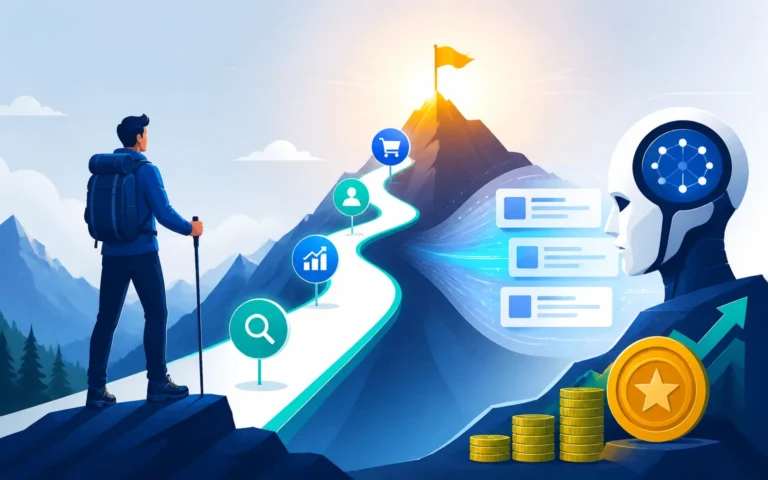
The most important change in 2026 is that AI search rewards a signal older SEO largely ignored: the unlinked brand mention. When Ahrefs studied 75,000 brands, it found that web mentions of a brand correlated 0.664 with visibility inside Google’s AI Overviews, while backlinks correlated only 0.218 — meaning mentions matter roughly three times more for AI visibility than traditional links. That’s a seismic change in how authority gets counted.
The pattern holds across independent research. Earned media and PR drive between 82% and 95% of all AI citations across six separate studies, regardless of methodology (Authority Tech earned-media analysis). And one analysis of more than 23,000 AI citations across ChatGPT, Perplexity, Gemini, and AI Overviews found that content distributed through third-party outlets was cited far more often than the same content sitting on a brand’s own domain (Omniscient Digital citation study). The takeaway I keep repeating to clients: get talked about, not just linked to. If AI search is new to you, my GEO and AEO guide to optimizing for AI search explains the wider playbook.
The Tactics That Actually Earn Links in 2026
Not all link building is created equal. When 755 link builders were surveyed, guest posting remained the most widely used tactic at 64.9%, but popularity and effectiveness are two different things (PressWhizz survey data). Roughly 48.6% of professionals now rate digital PR as the single most effective tactic, well ahead of guest posting at 16%. Here’s how I’d prioritize your effort.
Digital PR and Linkable Assets
Digital PR — creating newsworthy data, studies, or tools that journalists want to cite — has become the highest-ROI tactic in the industry. The average digital PR campaign earns links from about 42 referring domains at an average Domain Rating of 61 (LinkPanda digital PR statistics). Those are exactly the high-authority, editorially-given links that both Google and LLMs trust. The catch is competition: 75% of journalists receive up to 100 pitches a week and 73% reject pitches that don’t fit their beat (Digitaloft PR statistics). Relevance beats volume every single time.
Original Research and Statistics
Content that includes original data earns disproportionately more links than opinion pieces, which is precisely why statistics round-ups like the ones I’m citing throughout this article exist. If you can survey your audience, analyze your own product data, or aggregate hard-to-find numbers, you create a “linkable asset” that other writers reference for years. This is the compounding model in action — the reporter outreach industry has grown around exactly this behavior (Reporter Outreach statistics).
Guest Posting — Done Right
Guest posting still works when the site is genuinely relevant and the content is genuinely good. The failure mode is treating it as a link-dropping exercise on low-quality “write for us” farms. I use guest posts to build relationships and reach new audiences first, with the link as a byproduct rather than the entire point. That mindset keeps you on the right side of Google’s link spam policies.
How AI Changed Outreach — For Better and Worse
AI has quietly transformed the outreach half of link building. AI-assisted outreach emails now earn a 4.19% response rate versus 2.60% for non-AI messages — a 61% lift when the personalization is done thoughtfully. But the same tools flooded inboxes: editorial rejection rates rose 33% as journalists drowned in near-identical AI pitches. The lesson isn’t “don’t use AI”; it’s “use AI for research and drafting, then add the human specificity a machine can’t fake.” The global link-building services market — projected to grow from around $12.3 billion in 2023 toward $25.4 billion by 2032 — is being reshaped by exactly this tension between scale and authenticity (LinkBuild Agency market data).
My AI Outreach Workflow
I let AI handle the grunt work: finding relevant journalists, summarizing a publication’s recent coverage, and drafting a first-pass pitch tailored to a specific writer’s beat. Then I rewrite the opening line myself, reference a real article the person published, and make a concrete offer — data, a quote, or an exclusive angle. The response-rate advantage of AI only materializes when a human closes the gap on relevance.
Links You Should Never Build
Just as important as what to build is what to avoid. Private blog networks, paid links that pass PageRank, mass directory submissions, and comment spam all violate Google’s link spam policies and can trigger manual actions or algorithmic suppression. The math simply doesn’t favor risk anymore — a single high-authority editorial link outperforms hundreds of low-quality ones, and the cost of cleaning up a toxic profile dwarfs the cost of building slowly and cleanly. Authority is also built on trust signals across your whole site, which is why I pair every link campaign with the on-site work in my E-E-A-T trust signals guide.
A Realistic Link Building Process You Can Run This Quarter
Strategy is useless without execution, so here’s the repeatable process I follow. First, audit your existing profile and your top competitors’ profiles to find “link gaps” — sites linking to three competitors but not to you. Second, build one genuinely linkable asset per quarter: original research, a free tool, or a definitive guide. Third, run relevance-first outreach to journalists and site owners who cover your exact topic. Fourth, monitor unlinked brand mentions and, where appropriate, request a link — but remember that in the AI era, the mention itself already carries weight. Fifth, measure by referring domains earned and rankings gained, not by raw link count.
Consistency is what separates winners here. Because only 6% of content ever earns a link, even a modest, steady program puts you ahead of the vast majority of competitors who publish and pray. The industry-wide cost per earned link now hovers around $750, so every link you earn through owned assets and smart outreach is real budget saved (Searchlab benchmark data).
How to Measure Whether Your Links Are Actually Working
Vanity metrics kill link building programs. I’ve watched teams celebrate hitting a monthly link quota while their rankings flatlined, because the links they chased came from irrelevant, low-authority sites. The metrics I actually track are referring domains (not total links), the topical relevance of each linking site, the Domain Rating trend of my referring domains over time, and — increasingly — how often my brand appears in AI Overviews and LLM answers for target queries. Remember that digital PR campaigns average links from 42 referring domains at a Domain Rating of 61; if your program is earning links from sites far below that quality bar, you’re spending effort in the wrong place.
Attribution takes patience. A single strong editorial link rarely moves a keyword overnight; the compounding effect shows up over months as authority accumulates and Google recrawls. This is why I treat link building as a portfolio, not a lottery. I set a quarterly target for referring domains earned, tie each campaign to a specific page or topic cluster I want to strengthen, and review rankings 60 to 90 days after links go live rather than the following week. Because top-ranking pages pull in 5% to 14% more referring domains every month largely on autopilot once they establish authority, the goal is to get a page over that initial hump — after which momentum starts working for you instead of against you.
Frequently Asked Questions
Is link building still worth it in 2026?
Yes. Backlinks remain a top-three Google ranking factor and the first-ranking page averages 3.8 times more backlinks than pages below it. While backlinks’ share of algorithmic weight has slipped toward 13%, the correlation between referring domains and rankings is still the strongest of any measured factor, and links now double as a driver of AI-search visibility.
Are brand mentions really more important than backlinks now?
For AI search visibility, often yes. Ahrefs found brand mentions correlate 0.664 with AI Overview visibility versus 0.218 for backlinks, and earned media drives 82% to 95% of AI citations. For classic blue-link rankings, backlinks still lead. The smart play is to pursue tactics like digital PR that generate both a link and a mention at once.
How many backlinks do I need to rank?
There’s no fixed number — it depends on keyword competitiveness and your existing authority. Rather than chasing a count, compare your referring domains against the pages currently ranking on page one for your target term. Because top pages earn 5% to 14% more referring domains monthly, aim for steady growth that keeps pace with or exceeds those competitors.
What’s the safest link building tactic?
Creating genuinely useful, citable content — original research, tools, and definitive guides — and promoting it through relevant digital PR. These “earned” links are editorially given, which is exactly what Google’s guidelines reward and what AI models cite. Avoid anything you’d have to hide from a manual reviewer.
Can I automate link building with AI?
You can automate the research and drafting, and AI-assisted outreach does earn meaningfully higher response rates. But full automation backfires: rejection rates have climbed as inboxes fill with generic AI pitches. Use AI to scale preparation, then add human relevance before you hit send.
Final Thoughts
Link building didn’t die — it grew up. The spammy shortcuts stopped working, and in their place is a discipline that rewards genuine authority, useful content, and real relationships. Whether the destination is a Google ranking or a citation inside an AI Overview, the path is the same: create something worth talking about, then make sure the right people know it exists. Build that habit into your quarter, pair it with strong on-page fundamentals, and the links — and the mentions — will follow.