Improve Your Email Marketing Strategy in 2026

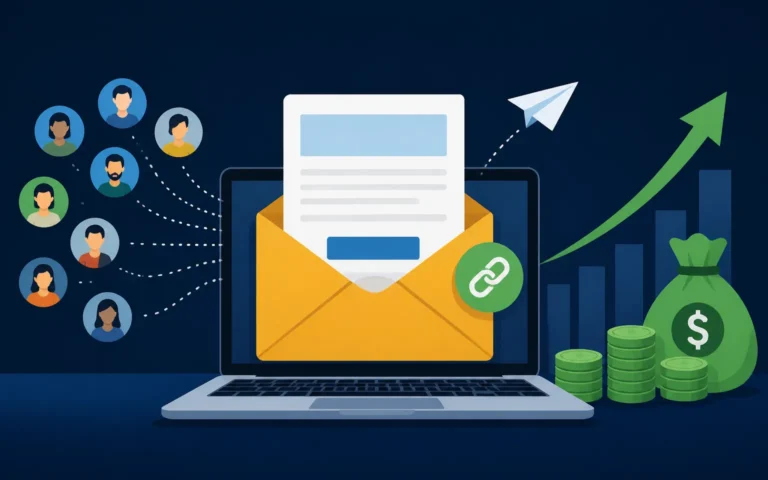
To improve your email marketing strategy, focus on seven things that compound: understand your audience, write compelling subject lines, design clean mobile-friendly emails, personalize and segment your sends, automate trigger-based campaigns, A/B test and analyze metrics, and integrate social media. Get these right and you drive higher engagement, more clicks, and measurable results while building a stronger connection with your audience.
Start by fixing what you measure. Litmus’ analysis of Apple Mail Privacy Protection showed MPP-affected opens climbing from 14.35% shortly after launch to more than half of all opens by 2022, because the feature pre-loads tracking pixels regardless of whether anyone reads the message. If your strategy is steered by open rate, it is being steered by noise.
Email marketing is a pivotal pillar in the realm of digital marketing. But achieving success in this field requires more than just sending out emails to a list of subscribers. It requires a strategic blend of understanding your target audience, crafting compelling subject lines, and enhancing your email design.
Ready to supercharge your email marketing? Below are the most effective tactics for improving your email marketing strategy and boosting engagement in 2026.
Key Takeaways
- Maximize engagement with targeted emails and motivating calls to action.
- Utilize personalization, dynamic content, and A/B testing to optimize performance.
- Analyze your metrics and incorporate social media for increased reach and sharing.
Understand Your Target Audience
Understanding your target audience is the foundation of every successful email campaign. Imagine trying to hit a bullseye blindfolded. That is akin to running email marketing campaigns without understanding who you are writing to.

Crafting compelling email content that resonates with your audience’s interests and desires heightens the impact of your email marketing campaign efforts. Nothing intrigues a subscriber more than an email that directly addresses their needs. Providing value like this significantly boosts the chances of subscribers engaging with your emails regularly, thus improving your email marketing strategy.
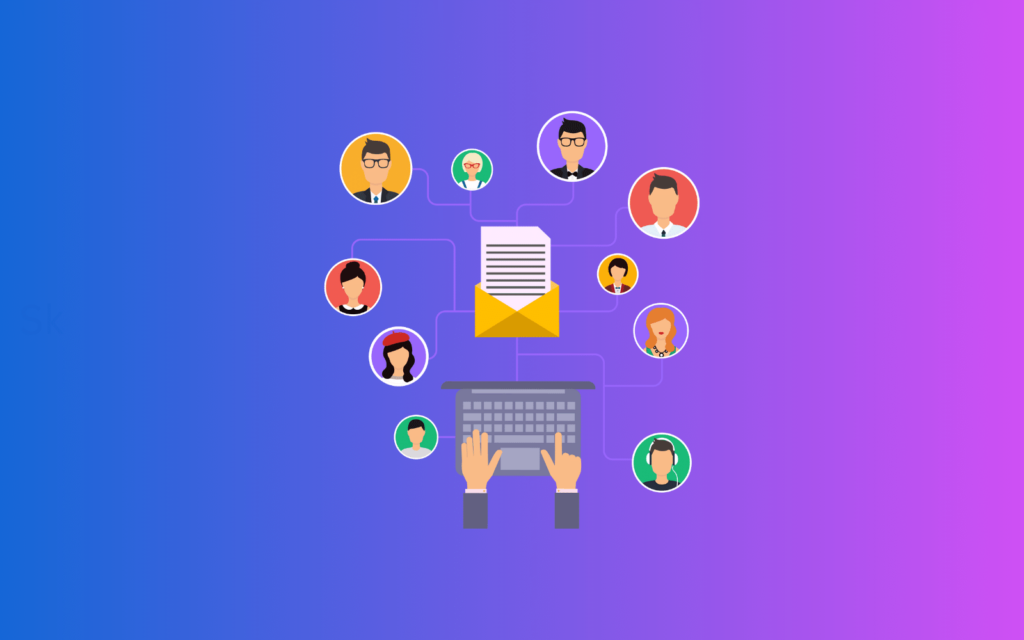
So what is the key to skyrocketing your email marketing success? Effectively managing your email lists often entails segmenting them based on specific criteria. This helps you tailor your messages to different audience groups and improve engagement.
This secret sauce drives higher open and click-through rates while reducing unsubscribes. By delivering targeted messages based on subscribers’ demographics, interests, and behaviors, you improve engagement and retention. This is where email service providers come into play, helping you segment your audience effectively and deliver targeted messages.
Optimize Email Subject Lines
Your subject line is your email’s first impression, the handshake that invites the reader in or turns them away. In email marketing, clear and compelling subject lines are vital to distinguishing your emails and enhancing the chances of click-throughs.

Did you know 35% of subscribers open emails based on the subject line alone? The subject line’s impact on the success of your email campaigns cannot be overstated.
You don’t need a wizard’s magic to create effective email subject lines. It is all about making them clear, concise, and attention-grabbing. This quickly communicates your email’s value proposition, avoids being cut off by email clients, and stands out in crowded inboxes. Just remember to avoid overly promotional subject lines that might turn readers away.
Enhance Email Design and Layout
Your email marketing masterpiece is painted on the canvas of email design and layout. It is about more than just aesthetics; it is about directing your reader’s journey through your email.
The trick is to use visual elements, ensure mobile optimization, and include clear calls to action. By implementing effective email marketing strategies and following essential email marketing tips, you can enhance the overall impact of your campaigns. Let’s delve into these key elements.
Use Visual Elements
A picture is worth a thousand words, especially in email marketing. Incorporating visual elements like images, graphics, and videos can add a dash of vibrancy to your emails, increasing their appeal and engagement and, ultimately, improving your email marketing strategy.
But what happens if an image doesn’t load? That is where alt text comes in. By adding alt text to email images, you ensure that your message is effectively communicated to recipients, even if they can’t immediately view the images, thus preserving the impact of the visual element. Additionally, providing a plain text version of your email can ensure it reaches all recipients, regardless of their email client or device limitations.
Going a step further involves making the language in alt text actionable. This can turn every linked image into another call-to-action (CTA), leveraging the visual elements to drive engagement and conversions. For more on this, see our guide on how to boost email engagement using images, videos, and dynamic content.
Ensure Mobile Optimization
Mobile optimization is no longer a nice-to-have; it is a must. Are you aware that over half of all emails are now read on mobile devices? By embracing the mobile trend, you can seize the opportunity to capture potential leads from the growing number of mobile device users.
Ensuring your emails capture attention and drive smartphone engagement can prevent them from being immediately deleted. Your secret weapon is responsive design. This ensures that your email templates automatically adapt to any device, optimizing your content, images, and layout for an excellent user experience across all screen sizes.
Include Clear Calls-to-Action
An email without a clear call-to-action (CTA) feels like a road trip without a destination. CTAs are essential for guiding subscribers toward desired actions, leading to increased conversion rates and overall campaign success.
But where do you place the CTA? Consider a location where it is easily visible and where it makes sense for someone to click. Make it irresistible. Leveraging tools like HubSpot, which allows customers to effortlessly add CTA buttons to their emails, can take CTAs to the next level.
Tip: Clear Calls-to-Action. Are you looking for inspiration? Look for resources offering free CTA button templates to kickstart your design journey.
Leverage Personalization and Segmentation
Personalization and segmentation are about sending targeted, relevant content to your subscribers, making them feel valued, and boosting open rates, click-through rates, and conversions. Ever received an email that felt like it was made just for you? That is the power of these two strategies.
Let’s explore these two powerful strategies in depth.
Implement Dynamic Content
In email marketing, dynamic content resembles a chameleon. It adapts to the recipient’s behavior, preferences, or other data. This tailored content can include:
- Product recommendations
- Messages based on purchase history
- Interests
- Demographics
By focusing your efforts this way, you can create more targeted and relevant email campaigns that truly resonate with your audience. The benefits of using dynamic content in emails are astounding: it creates personalized experiences at scale, improves customer experience, increases brand relevancy, and enhances marketing performance. To implement dynamic content in emails, you need to:
- Collect subscriber data
- Segment the audience
- Use personalization tags
- Create dynamic content blocks
- Test and optimize the email for the best results
Segment Your Email List
Organizing your email list is like arranging your wardrobe. By grouping contacts by demographics, interests, actions, or customer persona information, you can send more relevant and personalized emails, leading to higher click-through rates and e-commerce orders.
Powerful ways to segment your email list include grouping contacts by demographics, interests, actions, or customer persona information, such as where subscribers live or their jobs. For optimal results from segmentation, it is vital to consider factors like:
- Demographics
- Customer behavior and preferences
- The size of customers’ organizations
- The stage of the sales funnel
- Engagement metrics such as open rate and click-through rate
Amazon is a prime example of a company that has successfully implemented personalization strategies in its email marketing, creating a highly relevant customer experience. If you want to go deeper, explore our roundup of the best email marketing practices and tools.
Utilize Marketing Automation and Trigger-Based Campaigns
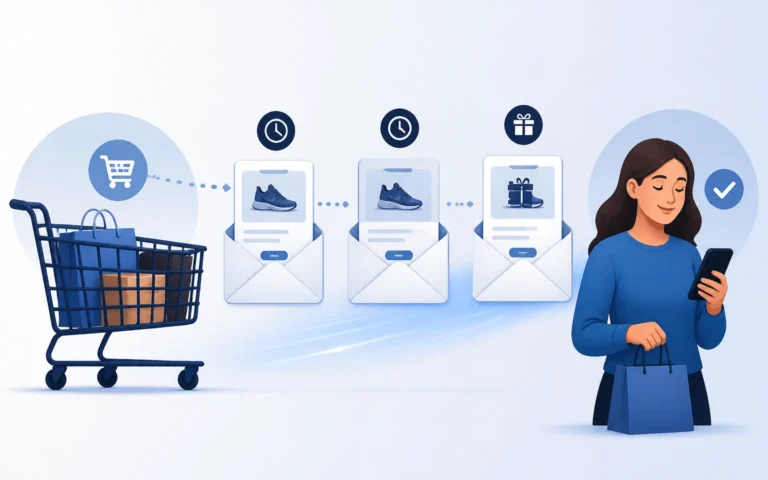
Picture a personal assistant who dispatches targeted emails automatically at the most opportune times. That is what marketing automation and trigger-based campaigns can do for your email marketing. They carry the heavy lifting, allowing you to focus on creating compelling content.
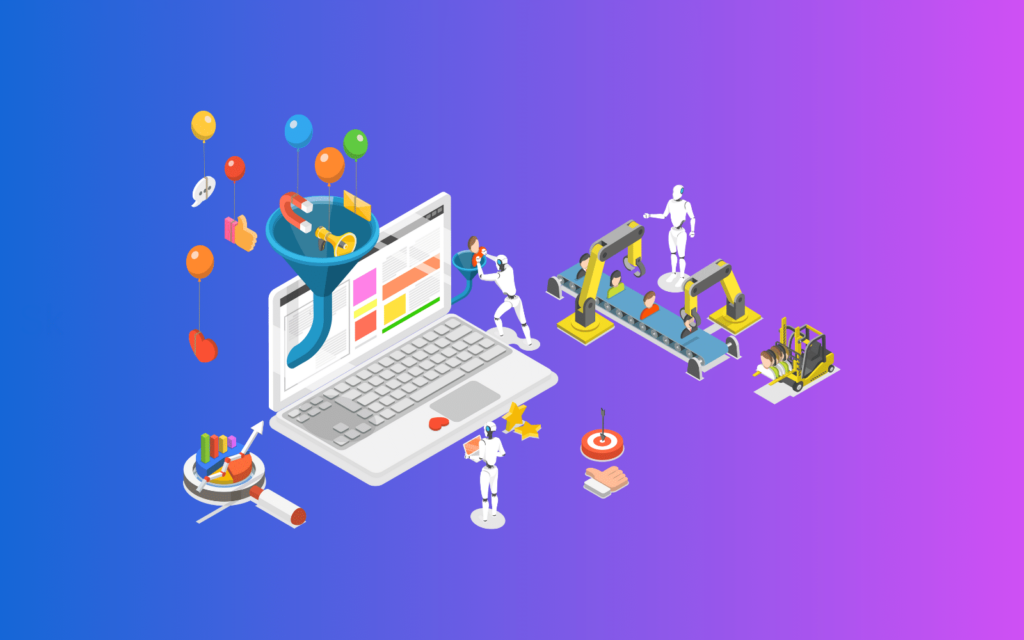
The principle of trigger-based emails resembles a domino effect. They send out emails based on specific actions taken by contacts, such as:
- Clicking a link in an email
- Adding items to their cart but not completing the purchase
- Abandoning their cart
- Making a purchase
This timely and relevant content increases customer engagement and drives more sales. By including incentives like free shipping codes or discounts, you can further motivate customers to complete purchases.
A classic example is a series of follow-up emails sent only to subscribers who engaged with specific content. To automate these campaigns, you can use email marketing tools to streamline communication, track and design order notifications, save time, and increase ROI.
Test and Optimize Your Emails
Testing and optimizing your emails can be compared to fine-tuning a musical instrument. The result is a harmonious symphony of high-performing emails that resonate with your audience.
Deliverability belongs in your optimization loop too, not just your technical checklist. Google’s sender guidelines FAQ sets out the alignment rules that decide whether your mail is accepted at all, and enforcement against non-compliant traffic has been ramping since November 2025. Check your authentication status before you spend another cycle testing subject lines.

Let’s investigate the two main methods to achieve this: A/B testing and analyzing email metrics.
Perform A/B Testing
In email marketing, A/B testing resembles a science experiment. Experiment with different subject lines and content in the same email to determine what resonates best with your audience. It is a game-changer for optimizing your email campaigns.
To achieve the best results in A/B testing, it is crucial to tweak only one element at a time so you can identify what is influencing the performance changes. The insights gained from A/B testing, like understanding how emojis in email copy can boost click-through rates, can help you revamp your content, subject lines, and email design to drive even better engagement in upcoming campaigns.
Analyze Email Metrics
Analyzing email metrics is like monitoring the pulse of your email marketing campaigns. It provides vital signs of the campaign’s health and performance. Conversion rate is one such metric. You get the conversion percentage by dividing the number of recipients who completed the desired action by the total number of successful email deliveries and multiplying the result by 100.
Another crucial metric is the unsubscribe rate. This shows the percentage of users who opt out of your mailing list after receiving an email campaign. Keeping this rate low indicates a vibrant email list with committed subscribers. Monitoring this metric is essential, as high unsubscribe rates can affect your deliverability performance. To learn more, read our guide on overcoming common email delivery issues.
Incorporate Social Media Integration
Given the interconnectedness of digital networks today, integrating social media into your email marketing strategy is a given. It is like opening a two-way communication channel, allowing your brand to engage with subscribers more personally and meaningfully.
Think of social sharing buttons as open gates, expanding the reach of your email and attracting more clicks and views. Tools like ClickToTweet make it effortless to share custom tweetable content from the email, effectively extending the life and reach of your email content. Here’s how you can integrate social media for maximum impact:
- Set clear goals
- Segment your audience
- Promote your email content on social media
- Encourage social sharing
- Maintain consistent branding
- Use social media to drive email subscriptions
- Optimize for social sharing
- Measure the results to refine your strategy
This kind of sustained, relationship-driven engagement also pairs well with retention marketing strategies that increase the long-term value of every subscriber you bring in.
Frequently Asked Questions
What are the 7 email marketing strategies? The seven core strategies are: make your emails personal, create segmented lists, run A/B tests, use automation wisely, make it mobile-friendly, include clear calls to action, and optimize for click-through rates. Together they cover the full lifecycle of a high-performing campaign.
What is the best way to build an email strategy? Start by setting goals and success metrics, then research your target audience, review results from the previous year, create segmented lists, and plan around important business dates and holidays. A defined plan keeps your sends consistent and measurable.
How can I be a better email marketer? Segment and manage your email lists, build complex workflows, optimize sign-ups and opt-ins, use fewer than three typefaces, include an email signature, clean your mailing list regularly, and keep the main message and call-to-action above the fold.
How do I get the best out of email marketing? Personalize your emails, use fewer than three typefaces, write powerful subject lines, include calls to action and social proof, and utilize ready-made templates and email marketing tools to save time and stay consistent.
How can understanding my target audience improve my email marketing strategy? Understanding your target audience lets you tailor your email marketing for maximum effectiveness, creating more engaging content that speaks directly to subscriber needs and increases the impact of every campaign.
How often should I send marketing emails? Send as often as you have genuinely valuable content, while watching your unsubscribe and engagement rates. For most brands a consistent weekly or biweekly cadence works well; let your metrics, not a fixed rule, guide the frequency.
Conclusion
Improving your email marketing strategy comes down to a repeatable system: understand your target audience, craft compelling subject lines, enhance your email design, leverage personalization and segmentation, utilize marketing automation, test and optimize your emails, and integrate social media. Apply these tactics consistently, measure what works, and watch your email marketing performance soar to greater heights in 2026.